
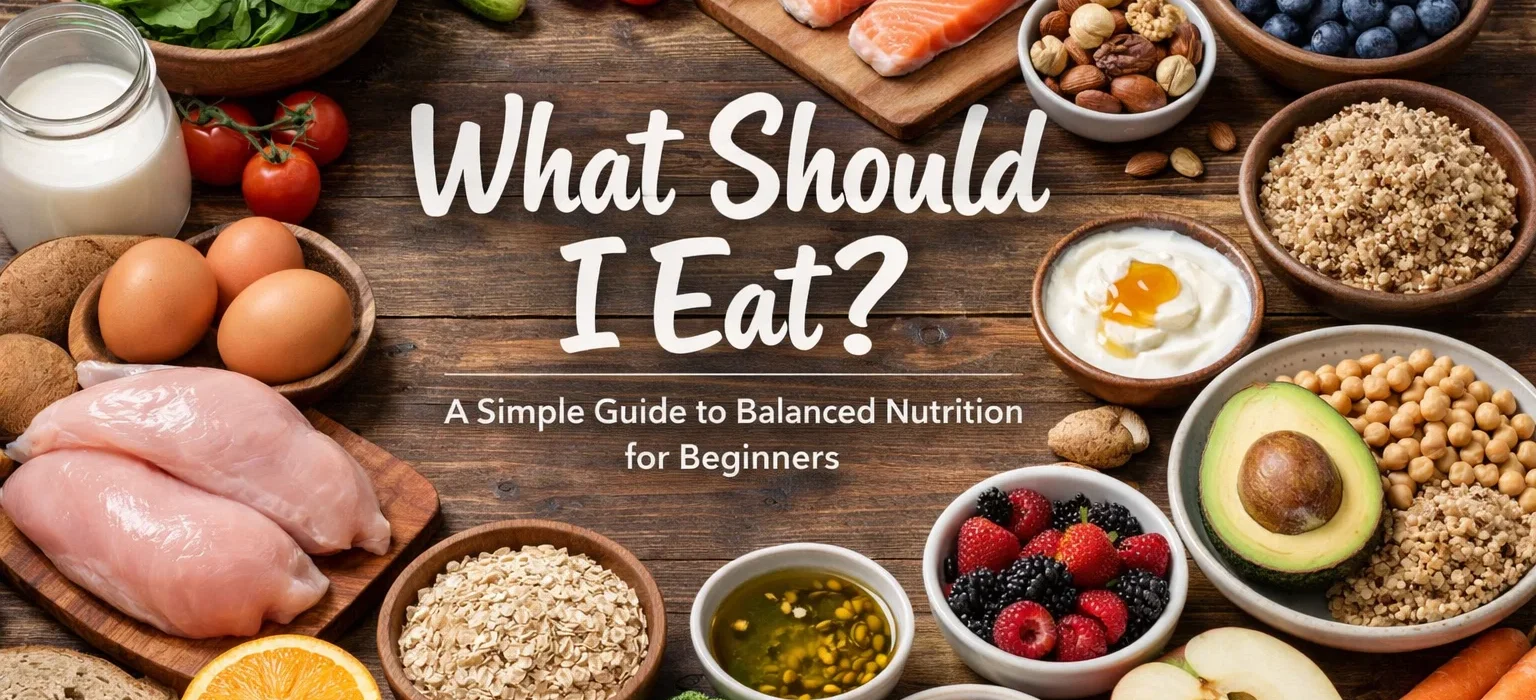

Overwhelmed by diet advice? This guide cuts through the noise and gives you a practical, science-backed framework for eating well — starting today.
📅 February 23, 2026 | ⏱ 9 min read
You’ve heard it a thousand times: “eat healthy.” But what does that actually mean? With diet trends changing every few months — keto, carnivore, plant-based, intermittent fasting — it’s easy to feel overwhelmed before you’ve even taken a single bite.
Here’s the truth: balanced nutrition doesn’t have to be complicated. In fact, once you understand a few core principles, eating well becomes one of the most empowering things you can do for your body. Energy goes up. Mood improves. Sleep gets better. And over time, your risk of nearly every chronic disease drops significantly.
This guide is for everyone — whether you’re starting from zero, coming back after a long break, or just looking to make sense of the noise. Let’s break it all down, step by step.

Why Balanced Nutrition Actually Matters
Think of your body as a high-performance machine. The food you eat is the fuel. Put in low-quality fuel consistently, and the engine starts to sputter — you feel tired, your mood dips, your focus fades, your skin looks dull, and over time, your risk of chronic disease climbs.
Feed it well, and everything changes. Balanced nutrition gives your body the vitamins, minerals, protein, fats, and carbohydrates it needs to function at its best — every single day. It isn’t about perfection. It’s about giving yourself the best possible foundation.
Research consistently links a balanced diet with reduced risk of type 2 diabetes, cardiovascular disease, certain cancers, depression, and cognitive decline. The food on your plate is one of the most powerful medicines available — and unlike most medications, it comes with only positive side effects.
🌿 Quick Perspective: You don’t need to overhaul your entire diet overnight. Research on behaviour change shows that one small, consistent improvement — sustained over weeks — produces more lasting results than dramatic, short-lived overhauls.
The 5 Core Nutrient Groups
A truly balanced diet includes all five of these nutrient categories. Each plays a distinct and essential role in your health.
| Nutrient | What It Does | Best Sources |
|---|---|---|
| 🥩 Protein | Repairs muscle tissue, makes enzymes and hormones, keeps you full, supports immune function | Eggs, chicken, fish, legumes, tofu, Greek yogurt |
| 🌾 Carbohydrates | Your brain’s primary fuel; complex carbs release energy slowly and keep blood sugar stable | Oats, sweet potato, brown rice, quinoa, whole grain bread |
| 🥑 Healthy Fats | Essential for brain health, hormone production, and absorbing fat-soluble vitamins A, D, E & K | Avocado, olive oil, nuts, seeds, salmon |
| 🥦 Fibre | Feeds gut bacteria, regulates digestion, lowers cholesterol, keeps you fuller longer | Vegetables, fruits, legumes, whole grains, chia seeds |
| 🫐 Micronutrients | Vitamins and minerals needed in small amounts but with enormous impact on every system in your body | Colourful vegetables, fruits, nuts, dairy, whole foods |
Protein: Your Body’s Building Blocks
Protein is fundamental to nearly every biological process. It builds and repairs muscle tissue, produces enzymes that drive digestion, creates hormones, supports immune function, and — crucially — keeps you feeling satiated for longer than carbohydrates or fat alone.
Most adults need approximately 0.8–1.2g of protein per kilogram of body weight per day, with active individuals and older adults benefiting from the higher end of that range. Include a quality protein source at every meal.
Carbohydrates: Not the Enemy
Carbohydrates have had an unfair reputation. The truth is, your brain runs almost entirely on glucose — a carbohydrate. Completely eliminating carbs is neither sustainable nor beneficial for most people. The key distinction is between complex carbohydrates (slow-releasing, gut-friendly, sustaining) and refined carbohydrates (blood sugar spikes, inflammation, energy crashes). Choose the former and enjoy the latter occasionally.
Healthy Fats: Your Brain’s Best Friend
Fat was vilified for decades, but the science is clear: dietary fat is essential. It enables the absorption of fat-soluble vitamins, supports brain structure and function (your brain is approximately 60% fat), and regulates inflammation. Focus on unsaturated fats — particularly omega-3 fatty acids found in fatty fish, walnuts, and flaxseeds.

The Simplest Framework: The Plate Method
Forget calorie counting for now. The plate method is a visual, intuitive approach to building balanced meals without any maths. Here’s how to divide your plate:
| Portion | What Goes Here | Why |
|---|---|---|
| ½ of your plate | Vegetables & fruit | Fibre, vitamins, minerals — nutrient-dense and low-calorie |
| ¼ of your plate | Quality protein | Muscle repair, satiety, hormone production |
| ¼ of your plate | Complex carbohydrates | Sustained energy, fibre, brain fuel |
| Thumb-sized portion | Healthy fat (olive oil, avocado, or nuts) | Vitamin absorption, brain health, satiety |
If your meals roughly follow this pattern, you’re already doing better than the vast majority of people. The plate method works because it’s flexible, visual, and doesn’t require tracking, weighing, or calculating.
Practical Tips to Start Today
Knowledge without action is just trivia. Here’s how to put this into practice immediately — without overhauling your entire life:
- Start with one meal. Pick one meal per day and make it as balanced as possible. Once that becomes effortless, add another.
- Prep once, eat twice. Cook one extra portion at dinner and pack it for lunch tomorrow. Meal prep doesn’t have to be a weekend project.
- Swap one drink. Replace one sugary drink per day with water, herbal tea, or sparkling water with lemon.
- Add, don’t subtract. Instead of focusing on what you’re removing, focus on adding a vegetable to whatever you’re already eating. This positive framing prevents deprivation mentality.
- Stock your kitchen strategically. Keep healthy staples visible and accessible. If the easy choice is also the good choice, you’ll make it without effort.
- Aim for progress, not perfection. One better choice, made consistently, compounds over time into profound change.
💡 The Power of Consistency: Research on dietary change shows that people who make one or two small, consistent changes sustain them far longer than those who attempt complete diet overhauls. Start small, make it stick, then build from there.
Common Beginner Mistakes to Avoid
Knowing what not to do is just as important as knowing what to do. These are the mistakes that derail even the most motivated beginners:
- Cutting out entire food groups. Your body needs variety. Eliminating carbs, fat, or any whole food category creates imbalances and is almost never sustainable.
- Skipping meals to “save” calories. This reliably backfires — stronger hunger later leads to poorer choices and often more total calories consumed.
- Following extreme, restrictive diets. If you can’t imagine eating this way in five years, don’t start. Sustainability is the most important quality of any dietary approach.
- Comparing your plate to someone else’s. Nutritional needs vary based on age, sex, activity level, health conditions, and genetics.
- Forgetting hydration. Even mild dehydration impairs cognitive function, mood, and energy. Aim for at least 2 litres per day.
- Expecting overnight results. Nutrition works cumulatively. Many benefits take weeks to become noticeable. Trust the process.
A Sample Day of Balanced Eating
Theory is useful. Seeing it in action is better. Here’s what a genuinely balanced day of eating could look like:
| Meal | What to Eat |
|---|---|
| 🌅 Breakfast | Oats with blueberries, a spoonful of almond butter, and a sprinkle of chia seeds. Black coffee or green tea. |
| ☀️ Mid-morning | A handful of walnuts and an apple. |
| 🥗 Lunch | Large salad with mixed greens, tinned salmon, cherry tomatoes, cucumber, avocado, and olive oil dressing. Slice of whole grain bread. |
| 🍵 Afternoon | Greek yogurt with a drizzle of honey. |
| 🍽️ Dinner | Baked chicken or tofu with roasted sweet potato, steamed broccoli, and a side salad. Olive oil over everything. |
| 🌙 Evening | Herbal tea. A square of dark chocolate if desired. |
This isn’t a strict meal plan — it’s a template. Swap proteins, rotate vegetables, adjust portions. The principle remains: every meal has vegetables, protein, a quality carbohydrate, and a healthy fat.

✦ Key Takeaways
- Balanced nutrition means including all five nutrient groups — protein, carbohydrates, healthy fats, fibre, and micronutrients — every day.
- The plate method (½ vegetables, ¼ protein, ¼ complex carbs, thumb of fat) is the simplest framework for balanced meals without tracking.
- Start with one meal, make it balanced, repeat consistently. Don’t try to change everything at once.
- Avoid cutting out food groups, skipping meals, and comparing your diet to others.
- Sustainable nutrition is built on small, consistent improvements — not dramatic overhauls.
Frequently Asked Questions
Do I need to count calories to eat healthy?
Not necessarily. For most beginners, focusing on food quality and the plate method is far more effective and sustainable than calorie counting. Tracking can be useful for specific goals, but it’s not a prerequisite for eating well.
Can I eat carbs and still be healthy?
Absolutely. Complex carbohydrates are essential for brain function, sustained energy, and gut health. The key is choosing whole food sources — oats, sweet potatoes, brown rice, quinoa — over refined options like white bread and sugary snacks.
How long before I notice a difference from eating better?
Many people notice improved energy and better mood within one to two weeks. Longer-term benefits — clearer skin, deeper sleep, improved focus, better digestion — typically become noticeable within four to eight weeks of consistent change.
What if I’m vegetarian or vegan?
The plate method works for all dietary patterns. Focus on plant-based proteins like legumes, tofu, tempeh, edamame, and seitan. Pay particular attention to getting adequate vitamin B12, iron, calcium, omega-3s, and zinc, which can be lower in plant-only diets.
Is it okay to eat the same meals every day?
Eating the same meals can aid consistency and reduce decision fatigue. However, variety is important for getting a broad spectrum of micronutrients and supporting a diverse gut microbiome. Try to rotate your vegetables and protein sources week to week.
Evidence-based wellness content to help you feel your best — body and mind. | The Whole You Wellness



Leave a Comment