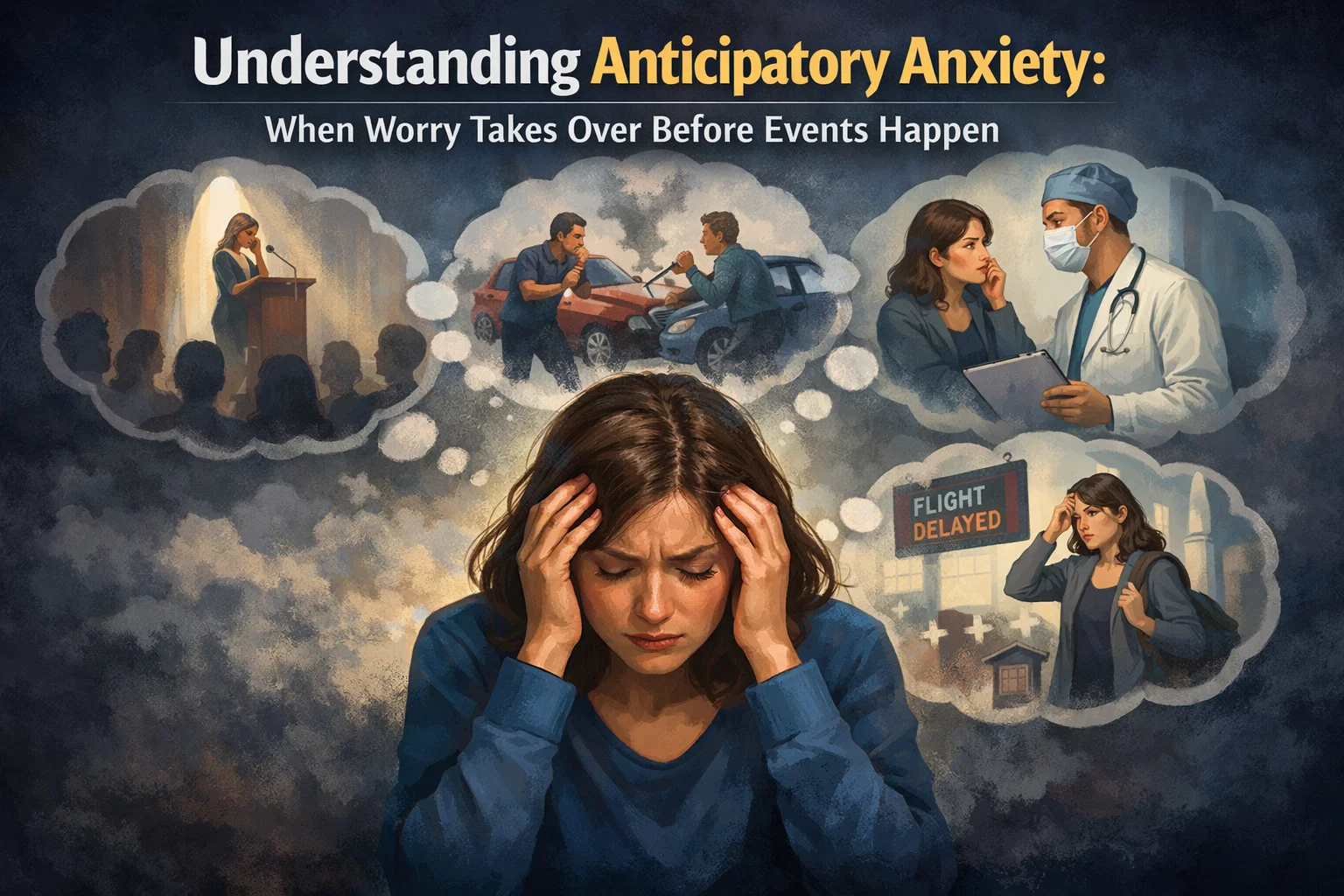

Have you ever felt your stomach tighten days before an important presentation? Or lost sleep worrying about a medical appointment that’s still a week away? If so, you’ve experienced anticipatory anxiety—a form of worry that can feel just as intense as the actual event you’re dreading, sometimes even worse.
What Is Anticipatory Anxiety?
Anticipatory anxiety is the distress we feel when thinking about future events, situations, or decisions that we perceive as threatening or challenging. Unlike anxiety that occurs during an actual stressful event, this type of worry happens entirely in our minds as we imagine what might go wrong.
Think of it as your brain’s attempt to prepare you for danger—except the danger hasn’t happened yet and may never happen at all. Your mind creates detailed scenarios of potential disasters, and your body responds as if those scenarios are real and happening right now.
Common Triggers and Situations
Anticipatory anxiety can show up in countless ways in daily life:
Social Situations Many people experience intense dread before social gatherings, parties, or meetings with new people. The worry might center on saying something embarrassing, being judged, or feeling uncomfortable in conversations.
Work and Performance Job interviews, presentations, important meetings, or performance reviews can trigger anticipatory anxiety days or even weeks in advance. The fear often involves making mistakes, being criticized, or not meeting expectations.
Health-Related Concerns Waiting for medical test results, anticipating a doctor’s appointment, or worrying about potential health issues can create significant distress. The unknown nature of health concerns often amplifies this anxiety.
Relationship Interactions Difficult conversations with partners, family members, or friends can cause anticipatory worry. You might rehearse the conversation repeatedly in your mind, imagining all the ways it could go badly.
Travel and New Experiences Planning a trip, trying something new, or stepping outside your comfort zone can trigger anticipatory anxiety, even when the activity is supposed to be enjoyable.
How Anticipatory Anxiety Affects Your Body and Mind
When you’re caught in anticipatory anxiety, your body doesn’t distinguish between imagined threats and real ones. You might experience:
- Racing heart or palpitations
- Muscle tension, especially in the neck and shoulders
- Digestive issues like nausea, diarrhea, or stomach pain
- Difficulty sleeping or insomnia
- Headaches or migraines
- Fatigue from constant worry
- Difficulty concentrating on present tasks
Mentally, you might notice yourself catastrophizing—jumping to worst-case scenarios—or getting stuck in “what if” thinking patterns that spiral into increasingly unlikely disasters.
The Cycle That Keeps You Stuck
Anticipatory anxiety often creates a self-perpetuating cycle:
- You imagine a future situation that feels threatening
- Your body responds with anxiety symptoms
- You interpret these physical sensations as proof that the situation really is dangerous
- You avoid the situation or overprepare to an exhausting degree
- The temporary relief from avoidance reinforces the pattern
- Next time, the anticipatory anxiety returns even stronger
This cycle can gradually shrink your world as you avoid more and more situations to escape the discomfort of anticipatory worry.
Why Some People Experience More Anticipatory Anxiety
Several factors can make you more prone to anticipatory anxiety:
Past Experiences: If you’ve had negative experiences in certain situations, your brain becomes hypervigilant about similar future events.
Perfectionism: Setting impossibly high standards for yourself creates more opportunities to worry about falling short.
Intolerance of Uncertainty: Some people find it extremely difficult to tolerate not knowing how things will turn out, leading to constant worry about future outcomes.
Trauma History: Past traumatic experiences can make your threat-detection system overly sensitive, causing you to anticipate danger even in relatively safe situations.
Practical Strategies to Manage Anticipatory Anxiety
While anticipatory anxiety can feel overwhelming, there are effective ways to reduce its grip on your life:
Ground Yourself in the Present Moment When you notice yourself spinning worry stories about the future, gently bring your attention back to right now. Notice five things you can see, four things you can touch, three things you can hear. This simple exercise reminds your brain that in this present moment, you’re safe.
Challenge Your Predictions Ask yourself: “How many times have I worried about something that never happened?” Most of our anxious predictions don’t come true. Even when challenging situations do occur, we usually cope better than we anticipated.
Set Worry Time Boundaries Designate a specific 15-minute period each day for worrying. When anticipatory thoughts arise outside this time, acknowledge them and postpone them until your designated worry period. Often, by the time worry time arrives, the concerns feel less urgent.
Focus on What You Can Control Identify which aspects of the situation you can influence and which you cannot. Direct your energy toward preparation that’s actually helpful, rather than repetitive worry that changes nothing.
Practice Progressive Exposure Instead of avoiding situations that trigger anticipatory anxiety, gradually expose yourself to them in manageable steps. Start small and build your confidence over time.
Use Your Body to Calm Your Mind Physical activity, deep breathing exercises, and progressive muscle relaxation can all help reduce the physical symptoms of anticipatory anxiety, which in turn calms your worried thoughts.
When to Seek Professional Help
While some anticipatory anxiety is normal, you should consider reaching out to a mental health professional if:
- Your worry is so intense it prevents you from doing important activities
- You’re avoiding more and more situations to escape anticipatory anxiety
- Physical symptoms are affecting your health or quality of life
- You’re using alcohol, substances, or other unhealthy coping mechanisms
- The anxiety persists despite trying self-help strategies
- You’re experiencing symptoms of depression alongside the anxiety
Therapy approaches like Cognitive Behavioral Therapy (CBT), Acceptance and Commitment Therapy (ACT), and Exposure Therapy have proven highly effective for treating anticipatory anxiety.
Moving Forward
Remember that anticipatory anxiety is your mind trying to protect you, even if it’s not doing a particularly good job of it. The goal isn’t to eliminate all worry about the future—some planning and concern is healthy and adaptive. Instead, aim to develop a healthier relationship with uncertainty and discomfort.
With practice and patience, you can learn to notice anticipatory anxiety without being controlled by it. You can acknowledge the worried thoughts while still moving forward with your life. The future you’re worrying about hasn’t happened yet, and when it does arrive, you’ll likely find you’re more capable of handling it than your anxiety wanted you to believe.
If you’re struggling with anticipatory anxiety and need support, consider reaching out to a qualified therapist who can provide personalized strategies and treatment. Taking that first step toward help is itself an act of courage in facing your anxiety.


Leave a Comment