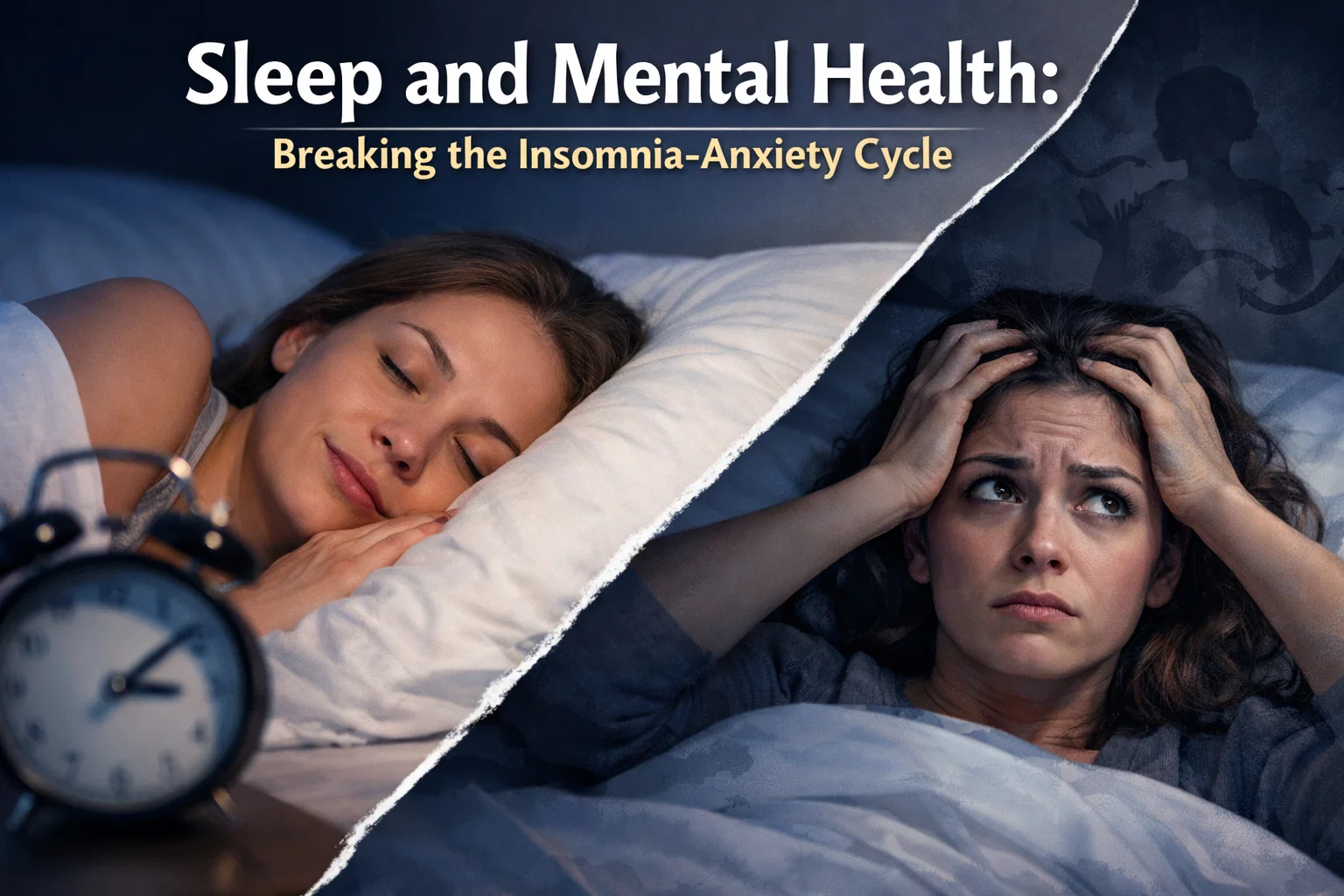

It’s 2 a.m., and you’re lying in bed wide awake, your mind racing through tomorrow’s tasks, replaying today’s conversations, catastrophizing about the future. You’re exhausted but can’t fall asleep. Or perhaps you’ve managed to fall asleep only to wake at 4 a.m. with anxious thoughts flooding in, unable to return to rest. You watch the hours tick by, knowing that tomorrow you’ll be exhausted, irritable, and barely functional—which only makes the anxiety about sleep worse.
This vicious cycle between sleep problems and mental health issues affects millions of people. Poor sleep worsens anxiety and depression, while anxiety and depression severely disrupt sleep. Breaking this cycle can feel impossible when you’re trapped in it, but understanding the connection between sleep and mental health is the first step toward reclaiming restful nights and better mental wellbeing.
The Bidirectional Relationship Between Sleep and Mental Health
Sleep and mental health have a complex, two-way relationship. It’s not simply that mental health problems cause sleep issues or that poor sleep causes mental health problems—both are true, creating a reinforcing cycle.
How Poor Sleep Affects Mental Health
Emotional regulation: Sleep deprivation impairs the brain’s ability to regulate emotions. The amygdala (the brain’s emotional center) becomes hyperactive, while the prefrontal cortex (which normally regulates the amygdala) becomes less effective. This means you’re more reactive, irritable, and prone to emotional outbursts when sleep-deprived.
Anxiety amplification: Lack of sleep increases anxiety sensitivity and makes you more prone to anxiety symptoms. Your threat-detection system becomes overactive, making neutral situations feel dangerous.
Depressive symptoms: Chronic sleep deprivation can trigger or worsen depression. The relationship is so strong that insomnia is both a symptom and a risk factor for depression.
Cognitive function: Poor sleep impairs concentration, memory, decision-making, and problem-solving—all of which can increase stress and feelings of incompetence.
Stress resilience: Sleep deprivation lowers your threshold for stress. Things that would normally be manageable feel overwhelming when you’re exhausted.
How Mental Health Affects Sleep
Anxiety and racing thoughts: Anxiety often manifests as hyperarousal—your nervous system is activated when it should be calming down for sleep. Racing thoughts, worry, and physical tension make falling asleep difficult.
Depression and sleep patterns: Depression can cause both insomnia and hypersomnia (excessive sleep). Some people with depression struggle to fall or stay asleep, while others sleep excessively but still feel unrefreshed.
Hypervigilance: Trauma, PTSD, or ongoing stress can keep your nervous system in a state of high alert, making it difficult to relax enough for sleep.
Medication effects: Some psychiatric medications can affect sleep, either causing drowsiness or insomnia as side effects.
Common Sleep Problems Associated with Mental Health
Insomnia
Insomnia involves difficulty falling asleep, staying asleep, or waking too early, despite adequate opportunity for sleep. It’s the most common sleep complaint among people with mental health conditions.
Sleep onset insomnia: Taking more than 30 minutes to fall asleep regularly. Your mind races, you feel alert, and despite being tired, sleep won’t come.
Sleep maintenance insomnia: Waking frequently during the night or waking in the early morning hours (often 3-5 a.m.) and being unable to return to sleep.
Early morning awakening: Waking significantly earlier than desired and being unable to fall back asleep, often accompanied by anxious or depressive rumination.
Hypersomnia
Sleeping excessively (often more than 10 hours daily) yet still feeling tired. This is particularly common in depression and can make it difficult to function during the day.
Nightmares and Night Terrors
Frequent disturbing dreams that disrupt sleep and cause distress. Particularly common in PTSD, anxiety disorders, and during periods of high stress.
Restless Sleep
Sleep that’s fragmented and unrefreshing, characterized by frequent movements, tossing and turning, or waking without remembering it.
The Insomnia-Anxiety Cycle
Understanding how insomnia and anxiety feed each other is crucial to breaking the cycle:
1. Initial Sleep Difficulty
Stress, life changes, or a temporary disruption causes sleep problems. This initial trigger might be a specific event, increased responsibilities, relationship stress, or health concerns.
2. Anxiety About Sleep
After several nights of poor sleep, you begin worrying about sleep itself. You dread bedtime, fear you won’t be able to fall asleep, and worry about how tired you’ll be tomorrow.
3. Hyperarousal
The anxiety about sleep activates your nervous system—the opposite of what’s needed for sleep. Your heart rate increases, your mind races, and you feel alert when you should feel drowsy.
4. Maladaptive Behaviors
To cope with sleep anxiety, you might engage in behaviors that actually worsen sleep: spending excessive time in bed trying to force sleep, napping during the day, checking the clock repeatedly, using screens late at night, drinking alcohol to help you sleep, or becoming inactive to conserve energy.
5. Conditioned Arousal
Your bedroom becomes associated with sleeplessness and anxiety rather than rest. Getting into bed triggers wakefulness instead of sleepiness.
6. Performance Anxiety
You try harder to sleep, which creates pressure and anxiety that makes sleep even more elusive. Sleep becomes a performance you’re failing at.
7. Sleep Deprivation Effects
The accumulating sleep loss worsens mood, increases anxiety during the day, impairs function, and makes you even more desperate for sleep.
8. Cycle Perpetuates
Each night’s sleep difficulty reinforces the anxiety about sleep, continuing the cycle. Even when life stressors resolve, the sleep problem persists because the anxiety about sleep itself has become the main issue.
Sleep in the South African Context
Several factors specific to South Africa can affect sleep quality:
Load Shedding
Power cuts disrupt evening routines, make it difficult to maintain consistent sleep schedules, can create heat or cold depending on the season, and cause anxiety about when power will return.
Strategies: Invest in battery-powered lights or lanterns, establish bedtime routines that don’t depend on electricity, use battery-powered fans or dress in layers for temperature regulation.
Safety and Security Concerns
Anxiety about break-ins or crime can make it difficult to relax enough to sleep. Hypervigilance about security, fear of what might happen during the night, and the stress of living in areas with high crime rates all impact sleep.
While security concerns are legitimate, work on distinguishing between appropriate precautions (secure locks, alarm systems) and anxiety-driven hypervigilance that prevents rest.
Economic Stress
Financial pressure, job insecurity, and supporting extended families on limited incomes create chronic stress that severely impacts sleep.
Noise Pollution
Urban areas with traffic, barking dogs, or neighbors in close proximity can disrupt sleep. In townships and informal settlements, high population density often means more noise.
Earplugs, white noise machines, or fans can help mask disruptive sounds.
Shift Work
Many South Africans work irregular hours, night shifts, or multiple jobs, severely disrupting natural sleep-wake cycles.
The Science of Sleep and Mental Health
Understanding sleep science can help you work with your body’s natural processes rather than against them:
Circadian Rhythm
Your body has an internal 24-hour clock (circadian rhythm) that regulates sleep-wake cycles, hormone release, body temperature, and other functions. This rhythm is influenced primarily by light and darkness.
When you disrupt your circadian rhythm through irregular sleep schedules, jet lag, or shift work, it affects mood, energy, and mental health.
Sleep Stages
Sleep cycles through different stages throughout the night:
NREM Stage 1: Light sleep, transition between waking and sleeping.
NREM Stage 2: Slightly deeper sleep, body temperature drops, heart rate slows.
NREM Stage 3: Deep, restorative sleep. Physical recovery, growth hormone release, immune system strengthening occur. Disrupting deep sleep particularly impacts mood and stress resilience.
REM Sleep: Rapid eye movement sleep where most dreaming occurs. Critical for emotional processing, memory consolidation, and mental health. Reduced REM sleep is associated with depression and mood problems.
A full sleep cycle takes about 90 minutes, and you typically experience 4-6 cycles per night. Both deep sleep and REM sleep are essential for mental health.
Sleep Pressure and Arousal
Two systems regulate sleep: sleep pressure (the longer you’re awake, the sleepier you get) and arousal (wakefulness). When anxiety or stress activates your arousal system too strongly, it overrides sleep pressure, preventing sleep despite exhaustion.
Breaking the Cycle: Evidence-Based Strategies
Cognitive Behavioral Therapy for Insomnia (CBT-I)
CBT-I is the gold standard treatment for chronic insomnia, often more effective than sleep medications long-term. It involves several components:
Sleep Restriction: Paradoxically, limiting time in bed improves sleep quality. If you’re only sleeping 5 hours but spending 9 hours in bed, you’re training your brain that beds are for lying awake. Sleep restriction initially involves spending only the amount of time in bed that you’re actually sleeping, then gradually increasing as sleep efficiency improves.
Stimulus Control: Re-associate your bed with sleep, not wakefulness:
- Use your bed only for sleep and intimacy, not reading, watching TV, worrying, or working
- If you can’t fall asleep within 20 minutes, get up and do a quiet activity until you feel sleepy, then return to bed
- Wake at the same time every morning, even weekends
- Avoid daytime naps
Cognitive Restructuring: Challenge unhelpful thoughts about sleep:
- “I must get 8 hours or I can’t function” → “I can cope with less sleep temporarily”
- “I’ll never fall asleep” → “Sleep will eventually come, even if it takes time”
- “This is terrible, I’m ruining my health” → “One night of poor sleep isn’t catastrophic”
Sleep Hygiene: Optimize your sleep environment and habits (detailed below).
Sleep Hygiene Fundamentals
Consistent Schedule: Go to bed and wake up at the same time every day, even weekends. This regulates your circadian rhythm.
Sleep Environment:
- Dark: Use blackout curtains or an eye mask. Even small amounts of light can disrupt sleep
- Quiet: Use earplugs or white noise if needed
- Cool: Slightly cooler temperatures (around 18°C/65°F) facilitate sleep
- Comfortable: Invest in a supportive mattress and pillows
Wind-Down Routine: Create a 30-60 minute pre-sleep routine that signals to your body it’s time to sleep:
- Dim lights an hour before bed
- Engage in relaxing activities: reading, gentle stretching, listening to calm music, warm bath
- Practice relaxation techniques
- Prepare for tomorrow (set out clothes, make lunch) so you’re not worrying about it
Light Exposure:
- Get bright light exposure during the day, especially morning
- Avoid bright screens 1-2 hours before bed (or use blue light filters)
- Use dim, warm lighting in the evening
Exercise: Regular physical activity improves sleep, but avoid vigorous exercise within 3 hours of bedtime as it can be activating.
Caffeine and Alcohol:
- Avoid caffeine after early afternoon (it has a 6-hour half-life)
- Limit alcohol, especially before bed. While it may help you fall asleep, it disrupts sleep quality later in the night
Food and Drink:
- Avoid large meals within 2-3 hours of bedtime
- Don’t go to bed very hungry or very full
- Limit fluids before bed to reduce nighttime waking
Managing Anxiety and Racing Thoughts at Night
Worry Time: Schedule 15-20 minutes earlier in the day for worrying. When worries arise at night, remind yourself you’ll address them during worry time tomorrow.
Thought Dump: Before bed, write down tomorrow’s tasks and any worries. This externalized them from your mind onto paper.
Cognitive Defusion: When anxious thoughts arise, observe them without engaging: “I’m having the thought that I won’t fall asleep” rather than “I won’t fall asleep.” This creates distance from the thought.
Mindfulness and Body Scan: Focus on physical sensations, breath, or progressively relaxing each body part. When your mind wanders to worries, gently return to the present.
Breathing Exercises:
- 4-7-8 breathing: Inhale for 4 counts, hold for 7, exhale for 8
- Box breathing: Inhale 4, hold 4, exhale 4, hold 4
- Slow, diaphragmatic breathing activates your parasympathetic (calming) nervous system
Imagery: Visualize peaceful, calming scenes in detail, engaging all senses. This occupies your mind with pleasant content instead of anxious thoughts.
Progressive Muscle Relaxation: Systematically tense and release muscle groups from toes to head, releasing physical tension that accompanies anxiety.
What NOT to Do
Don’t watch the clock: Clock-watching increases anxiety. Turn clocks away from view.
Don’t force sleep: Trying harder to sleep creates performance anxiety that prevents sleep. Allow sleep to come naturally.
Don’t catastrophize: One night of poor sleep isn’t disastrous. Even severe sleep deprivation doesn’t cause permanent harm.
Don’t nap excessively: If you must nap, keep it to 20-30 minutes in early afternoon. Long or late naps interfere with nighttime sleep.
Don’t use screens in bed: The blue light, stimulating content, and habit of associating bed with wakefulness all interfere with sleep.
Don’t rely on alcohol: While it may help you fall asleep initially, alcohol severely disrupts sleep quality and causes early waking.
When Sleep Problems Indicate Underlying Conditions
Sleep Apnea
If you snore loudly, wake gasping for air, have excessive daytime sleepiness despite adequate time in bed, or your partner reports you stop breathing during sleep, you may have sleep apnea—a serious condition requiring medical treatment.
Restless Leg Syndrome
Uncomfortable sensations in legs (creeping, crawling, tingling) that create an irresistible urge to move them, typically worse at night, can severely disrupt sleep.
Circadian Rhythm Disorders
If you consistently can’t fall asleep until very late (delayed sleep phase) or wake extremely early (advanced sleep phase), you may have a circadian rhythm disorder requiring specialized treatment.
Depression and Sleep
If you’re sleeping excessively, have early morning wakening with inability to return to sleep, or sleep problems accompanied by persistent sadness, loss of interest, or hopelessness, you may be experiencing depression requiring treatment.
Medication and Sleep
Sleep Medications
Prescription sleep medications (benzodiazepines, Z-drugs) can provide short-term relief but have significant downsides:
- Tolerance develops, requiring higher doses
- Dependency can occur
- They don’t promote natural sleep architecture
- Withdrawal can worsen insomnia
- They don’t address underlying causes
Sleep medications are best used short-term while implementing behavioral changes, not as long-term solutions.
Psychiatric Medications
If you have anxiety or depression, appropriate psychiatric medication can improve both mental health and sleep. SSRIs, for example, often improve sleep quality once the initial adjustment period passes.
Discuss sleep issues with your psychiatrist—medication adjustments may help.
Melatonin
Melatonin supplements can be helpful for circadian rhythm issues (jet lag, shift work) but are less effective for anxiety-related insomnia. Use low doses (0.5-3mg) and take 1-2 hours before desired bedtime.
Natural Remedies
While evidence is limited, some people find relief from herbal teas (chamomile, valerian), magnesium supplements, or lavender. These are generally safe but discuss with your healthcare provider, especially if taking other medications.
Creating a Long-Term Sleep Strategy
Track patterns: Keep a sleep diary for 1-2 weeks, noting bedtime, wake time, time to fall asleep, nighttime wakings, total sleep time, and factors that might affect sleep (caffeine, stress, exercise). This helps identify patterns and problem areas.
Set realistic goals: Perfect sleep every night isn’t realistic. Aim for overall improvement, accepting that some nights will be better than others.
Be patient: Sleep improvements take time. Behavioral changes typically show results within 2-4 weeks, but full benefits may take longer.
Address underlying mental health: If anxiety or depression underlies your sleep problems, treating those conditions will improve sleep.
Seek professional help if needed: If you’ve tried these strategies consistently for several weeks without improvement, or if sleep problems severely affect your functioning, consult a healthcare provider. They can rule out medical causes and may recommend specialized treatment like CBT-I.
Supporting Someone with Sleep and Mental Health Issues
If someone you care about struggles with sleep and mental health:
Be understanding: Don’t minimize their experience or say “just relax” or “stop worrying about it.” Insomnia isn’t a choice.
Avoid judgment: Comments about sleep schedules or habits can increase anxiety. Offer support, not criticism.
Support healthy habits: Help create a good sleep environment, join them in establishing routines, or reduce evening stimulation.
Encourage professional help: Gently suggest seeing a healthcare provider if problems persist.
Take care of yourself: Supporting someone with sleep issues can be draining. Ensure your own sleep and wellbeing are protected.
Moving Forward: Reclaiming Restful Sleep
Breaking the insomnia-anxiety cycle is possible, though it requires patience, consistency, and often challenging some deeply ingrained habits and beliefs about sleep.
Remember that sleep is a natural biological process. You don’t need to force it or control it—you simply need to create conditions that allow it to occur naturally. This often means doing less (worrying less, trying less hard) rather than more.
Your relationship with sleep may have become anxious and adversarial. Healing this relationship involves building trust that your body knows how to sleep, reducing the pressure and anxiety around sleep, and creating consistent routines that support natural sleep processes.
Even if you’ve struggled with sleep for years, improvement is possible. Many people with chronic insomnia achieve lasting relief through the approaches outlined here, particularly when combined with appropriate treatment for underlying mental health conditions.
You deserve restful sleep. The energy, mood stability, and quality of life that come with good sleep are within your reach.
If sleep problems are accompanied by severe depression, suicidal thoughts, or significantly impaired functioning, please seek immediate help:
- SADAG: 0800 567 567
- Your healthcare provider
- Emergency services if in crisis
Quality sleep is fundamental to mental health. Don’t hesitate to seek professional support if you need it.



Leave a Comment