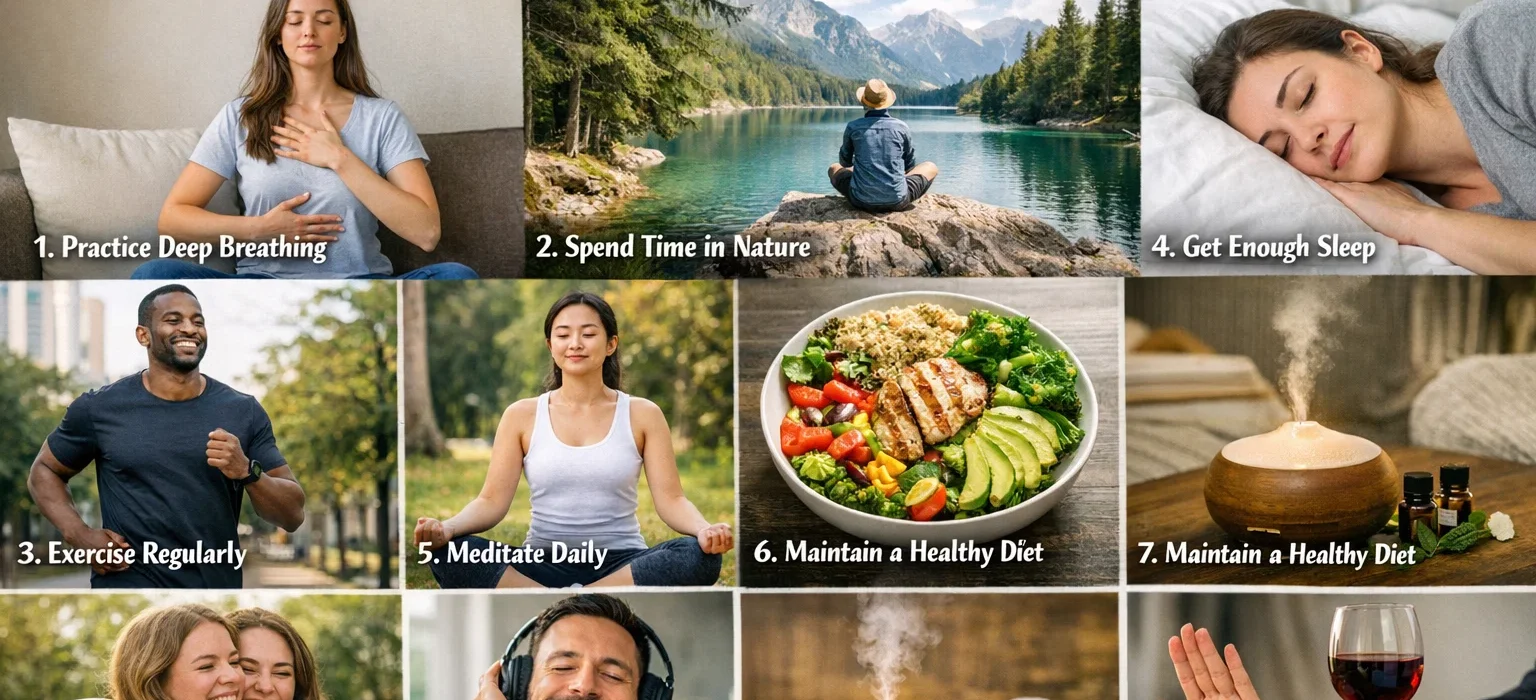

Stress is unavoidable. But suffering from it doesn’t have to be your default state. These 10 evidence-based strategies don’t just temporarily mask stress — they structurally reduce it. And most of them cost absolutely nothing.
📅 March 9, 2026 | ⏱ 9 min read | 🧠 Mental Health
We live in what many researchers are calling the most chronically stressed era in human history. Work pressures, financial uncertainty, information overload, social comparison, global news cycles — the modern nervous system is fielding a relentless stream of stressors that our ancestors simply never faced.
And yet — the tools to manage stress effectively are largely free, widely available, and backed by some of the strongest evidence in wellness science. The problem isn’t that solutions don’t exist. The problem is that most people haven’t been taught what actually works versus what just feels like it should work.
This article covers 10 strategies that are genuinely, measurably effective at reducing stress — not just in the moment, but structurally, over time. Some are quick. Some take weeks to build. All of them are worth your attention.

What Chronic Stress Actually Does to Your Body
Before diving into solutions, it helps to understand what you’re actually dealing with. Stress isn’t just a feeling — it’s a cascade of physiological events triggered by your brain’s threat-detection system.
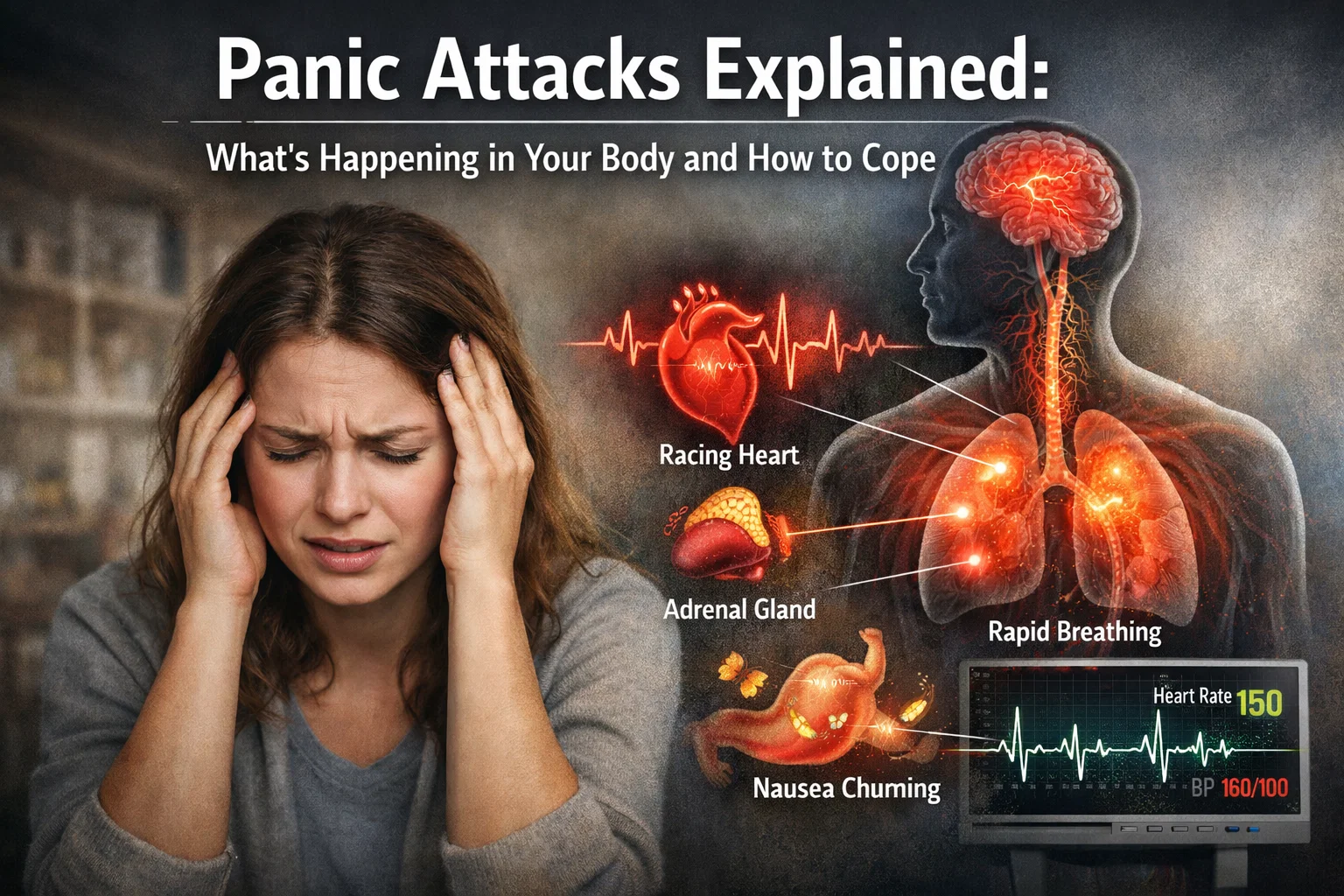
When you perceive a threat (real or imagined), your hypothalamus fires your sympathetic nervous system into action. Adrenaline floods your bloodstream. Cortisol follows. Your heart rate rises, blood is redirected to your muscles, digestion slows, and your immune system is temporarily suppressed. This is your fight-or-flight response — and in genuine emergencies, it’s lifesaving.
The problem is that your nervous system can’t distinguish between a lion and a difficult email. It responds to both with the same physiological cascade. And when stressors are constant — notifications, deadlines, conflict, financial worry — this cascade never fully switches off.
Chronic activation of the stress response leads to:
- Persistent fatigue and sleep disruption
- Weakened immune function and increased susceptibility to illness
- Digestive issues, including IBS and acid reflux
- Elevated blood pressure and increased cardiovascular risk
- Anxiety, depression, and emotional dysregulation
- Impaired memory, focus, and decision-making
- Accelerated cellular ageing
This is why stress management isn’t a “nice to have.” It’s a core pillar of health maintenance. Now — here’s what actually works.
1. Diaphragmatic Breathing (Box Breathing)
Your breath is the only autonomic function you can consciously control — and this makes it an extraordinary tool for directly influencing your nervous system state. Deep, slow, diaphragmatic breathing activates the parasympathetic nervous system — your body’s “rest and digest” mode — within minutes.
The science is robust: even five minutes of slow, controlled breathing measurably lowers cortisol levels, reduces heart rate, and shifts brainwave activity toward calmer states. It’s used by special forces soldiers, elite athletes, and emergency room staff — because it works fast and it works reliably.
Two techniques worth learning:
- 4-7-8 Breathing: Inhale for 4 counts. Hold for 7 counts. Exhale slowly for 8 counts. The extended exhale is key — it’s what triggers the parasympathetic response. Do 4–6 cycles.
- Box Breathing: Inhale for 4 counts. Hold for 4 counts. Exhale for 4 counts. Hold for 4 counts. Repeat. This is particularly effective for acute anxiety or before stressful situations.
💡 Try This Right Now: Stop reading for 60 seconds and do 4 rounds of 4-7-8 breathing. Notice the shift in your body. This is your parasympathetic nervous system activating — and it’s available to you any time, anywhere, at zero cost.
2. Move Your Body Every Day
Exercise is arguably the most powerful natural stress-reducer we have. Physical movement metabolises stress hormones directly — it does what the fight-or-flight response was designed to do: use the adrenaline and cortisol productively, and then allow the body to return to baseline.
Beyond hormone metabolism, regular exercise:
- Releases endorphins — natural mood elevators with pain-relieving properties
- Increases BDNF (brain-derived neurotrophic factor) — a protein that literally grows new neural connections and improves stress resilience over time
- Improves sleep quality, which directly reduces stress reactivity the following day
- Provides a sense of mastery and accomplishment that counteracts helplessness
Crucially, you don’t need intense exercise to get these benefits. A 20-minute brisk walk is sufficient to significantly reduce anxiety and elevate mood for two to four hours afterward. Higher intensity training amplifies the benefits but isn’t a prerequisite for stress reduction.
✅ Action Step: Commit to one 20-minute walk per day for the next two weeks. No gym required. No special clothing. Just 20 minutes of brisk movement outdoors. Track how you feel at the end of each day. Most people are surprised by how quickly this changes their baseline stress level.

3. Prioritise Sleep as a Non-Negotiable
Sleep and stress have a bidirectional relationship: stress disrupts sleep, and poor sleep amplifies stress. Research from UC Berkeley found that sleep deprivation increases the emotional brain’s reactivity to stressors by up to 60%. When you’re tired, your prefrontal cortex — the rational, regulating part of your brain — is less able to modulate the amygdala’s fear and threat responses.
In other words: a poorly slept version of you isn’t just more tired. They’re neurologically less equipped to handle the same stressors that a rested version of you would navigate easily.
Protecting your sleep is one of the highest-leverage stress-reduction strategies available. Treat it like an appointment you cannot miss — because neurologically, your stress resilience depends on it.
🔬 Science Note: A consistent sleep schedule — going to bed and waking at the same time every day — is more important for stress resilience than total sleep hours. Regularity anchors the circadian rhythm, which regulates cortisol release throughout the day.
4. Limit News and Social Media Consumption
Your nervous system cannot distinguish between a threat in your environment and a threat on your screen. News of violence, political conflict, natural disasters, and social injustice triggers the same physiological stress response as a direct personal threat — just at lower intensity, but constantly, all day.
Constant media consumption creates what researchers call “vicarious trauma” and “headline stress disorder” — a persistent low-grade anxiety driven not by personal circumstances, but by an endless stream of curated bad news. Social media compounds this with social comparison, which activates similar threat responses.
This doesn’t mean ignoring the world. It means consuming news intentionally, in limited doses, rather than passively absorbing it all day.
- Set two specific times to check news: once in the morning (briefly) and once in the evening
- Remove social media apps from your phone’s home screen — placing them one extra step away reduces use by 20–30%
- Turn off all non-essential notifications — research shows the average person loses 23 minutes of focused attention per notification-triggered interruption
- Designate your bedroom as a phone-free zone
5. Invest in Human Connection
Social connection is one of the most robust stress buffers in the scientific literature. Meaningful interaction with trusted people increases oxytocin (the bonding hormone), directly suppresses cortisol, and activates the ventral vagal state — the nervous system’s mode of safety and calm.
Loneliness, conversely, is physiologically stressful. Isolation activates the same neural threat-response systems as physical danger, because for our ancestors, being separated from the group was genuinely life-threatening.
You don’t need a large social circle. You need a few people with whom you can be genuinely yourself. Even a 10-minute phone call with someone you trust can measurably shift cortisol levels and emotional state.
💡 This Week: Reach out to one person you haven’t spoken to in a while. A text, a call, or a coffee. Don’t overthink it. Social connection is medicine — and unlike most medicines, the side effects are all positive.
6. Spend Time in Nature
The Japanese practice of shinrin-yoku — forest bathing, or spending time immersed in a natural environment — has been studied extensively and the results are consistently impressive. Time in nature measurably reduces cortisol, lowers blood pressure, decreases heart rate, and improves mood — even in sessions as short as 20 minutes.
Research from the University of Michigan found that a 90-minute walk in a natural setting reduced activity in the subgenual prefrontal cortex — the brain region associated with rumination and negative self-referential thinking. Urban walks, by contrast, produced no such effect.
You don’t need a forest. A park, a garden, a beach, or any green space will do. The key ingredients appear to be natural light, natural sounds (birdsong, water, wind), and the absence of urban stimulation. Aim for at least 20 minutes in a natural setting three or more times per week.
7. Practise Mindfulness or Meditation
Mindfulness-Based Stress Reduction (MBSR) — an eight-week programme developed by Dr. Jon Kabat-Zinn at the University of Massachusetts — has produced some of the strongest evidence in wellness research. Regular MBSR participation reduces perceived stress, anxiety, and depression, and produces measurable changes in brain structure.
Specifically, regular meditation practice:
- Shrinks the amygdala (the brain’s fear and threat-detection centre) over time
- Strengthens the prefrontal cortex (rational regulation of emotions)
- Increases grey matter density in regions associated with learning, memory, and self-awareness
- Reduces default mode network activity — the “monkey mind” chatter associated with anxiety and rumination
You don’t need to commit to an eight-week programme immediately. Starting with just five minutes of guided meditation daily — using a free app like Insight Timer, or simply following a breathing practice — produces meaningful benefits within four weeks of consistency.
🔬 Science Note: A landmark Harvard study found that just eight weeks of mindfulness meditation produced measurable increases in grey matter density in the hippocampus (memory, learning, emotional regulation) and measurable decreases in amygdala density — the physical architecture of reduced stress reactivity.
8. Reduce Caffeine and Alcohol
Both caffeine and alcohol are frequently used as stress management tools — and both, in different ways, make stress worse over time.
| Substance | Short-Term Effect | Long-Term Effect on Stress |
|---|---|---|
| ☕ Caffeine | Increases alertness, temporarily boosts performance | Raises cortisol and heart rate, disrupts sleep, increases anxiety baseline |
| 🍷 Alcohol | Reduces inhibition, temporarily feels relaxing | Disrupts sleep architecture, increases anxiety the following day (“hangxiety”), depletes B vitamins |
You don’t need to eliminate either substance entirely. But if you’re struggling with chronic stress and consuming both daily, moderating your intake — particularly caffeine after 1pm and alcohol before sleep — will produce a noticeable improvement in baseline stress and sleep quality within two weeks.
9. Write It Down
Expressive writing is one of the most underrated stress-management tools in psychological research. Spending 15–20 minutes writing freely about a stressful event — including your thoughts, feelings, and the meaning you’ve made of it — reduces the psychological impact of that event measurably.
The mechanism appears to involve translating emotional experience into language, which activates the prefrontal cortex and helps “contain” the emotional charge of the experience. It also allows you to identify cognitive distortions — the catastrophic or irrational thinking patterns that amplify stress beyond what circumstances actually warrant.
You don’t need a beautiful journal or a structured method. Stream of consciousness works. Try this prompt: “Right now I’m feeling… and here’s what’s behind it…” Write for 15 minutes without editing or judging. Do this three to four times per week.
10. Build a Grounding Morning Routine
How you start your morning sets the neurological tone for your entire day. A chaotic, reactive morning — phone in hand within 60 seconds of waking, rushing, conflict — primes your stress response before any real challenge has occurred. You’re already in a mild threat state when the day begins.
An intentional morning routine creates a buffer between sleep and demands. It communicates to your nervous system: I am in control. I am not under threat. Today begins on my terms.
Your morning routine doesn’t need to be long. Even 10–15 intentional minutes produces measurable benefits:
- Get outside within 10 minutes of waking — natural light anchors your circadian rhythm and modulates cortisol
- Drink a large glass of water before coffee
- Write one intention for the day (not a to-do list — one quality or focus)
- Do 5 minutes of breathing or gentle movement
- Avoid your phone for the first 20–30 minutes

All 10 Strategies at a Glance
| # | Strategy | Time to See Results | Cost |
|---|---|---|---|
| 1 | Diaphragmatic breathing | Immediate | Free |
| 2 | Daily movement | 2–4 weeks | Free |
| 3 | Protect sleep | 1–2 weeks | Free |
| 4 | Limit screens and news | Days to 1 week | Free |
| 5 | Human connection | Immediate to days | Free |
| 6 | Time in nature | Immediate to days | Free |
| 7 | Meditation / mindfulness | 4–8 weeks | Free (app optional) |
| 8 | Reduce caffeine and alcohol | 1–2 weeks | Free (saves money) |
| 9 | Expressive writing / journalling | 1–3 weeks | Free |
| 10 | Intentional morning routine | 1–2 weeks | Free |
✦ Key Takeaways
- Chronic stress is a physiological state — not just a feeling — that damages your body, brain, and mental health over time.
- Diaphragmatic breathing works immediately; meditation, exercise, and sleep habits produce structural changes over weeks.
- You don’t need to implement all 10 strategies at once. Pick one or two, practise them consistently for 30 days, then add another.
- Limiting screens, news, and social media removes a significant source of low-grade chronic stress that most people underestimate.
- Every strategy on this list is free, evidence-based, and available to you right now.
Frequently Asked Questions
What is the fastest way to reduce stress naturally?
Diaphragmatic breathing (particularly the 4-7-8 technique) produces measurable physiological calming within 2–3 minutes by directly activating the parasympathetic nervous system. It’s the fastest evidence-based stress-reduction tool available. For slightly longer-term relief, a 20-minute walk in nature combines the benefits of exercise and natural environment exposure for powerful, rapid stress relief.
Can stress be reduced without medication?
Yes — for the vast majority of people experiencing everyday stress, the natural strategies in this article are highly effective without any medication. That said, if stress has progressed to clinical anxiety or depression, professional support (therapy, and in some cases medication) is appropriate and important. Natural strategies and professional treatment are not mutually exclusive — they work best together.
How long does it take for meditation to reduce stress?
Research suggests that consistent meditation practice — even just 5–10 minutes daily — produces measurable reductions in perceived stress within 4–8 weeks. Structural brain changes (reduced amygdala density, increased prefrontal cortex grey matter) have been documented after just 8 weeks of regular practice. The key word is consistency: daily short sessions beat occasional long sessions.
Does exercise really help with stress and anxiety?
Yes — the evidence is extremely strong. Exercise metabolises stress hormones (adrenaline and cortisol), releases endorphins and BDNF, improves sleep quality, and builds long-term stress resilience. Multiple meta-analyses have found that regular aerobic exercise is as effective as antidepressant medication for mild to moderate anxiety and depression. Even 20 minutes of brisk walking produces measurable mood improvements.
Is it possible to completely eliminate stress?
No — and you wouldn’t want to. Acute stress in manageable doses (called “eustress”) improves focus, performance, and resilience. The goal isn’t zero stress. It’s developing the capacity to handle stress well, recover quickly from it, and prevent it from becoming chronic. These 10 strategies build exactly that capacity.
How do I know if my stress is becoming a serious problem?
Seek professional support if stress is significantly impairing your daily functioning, sleep, relationships, or work for more than two to four weeks; if you’re experiencing panic attacks, persistent hopelessness, or difficulty leaving the house; or if you’re using alcohol, substances, or other unhealthy coping mechanisms to manage daily life.
Evidence-based wellness content to help you feel your best — body and mind. | The Whole You Wellness


Leave a Comment