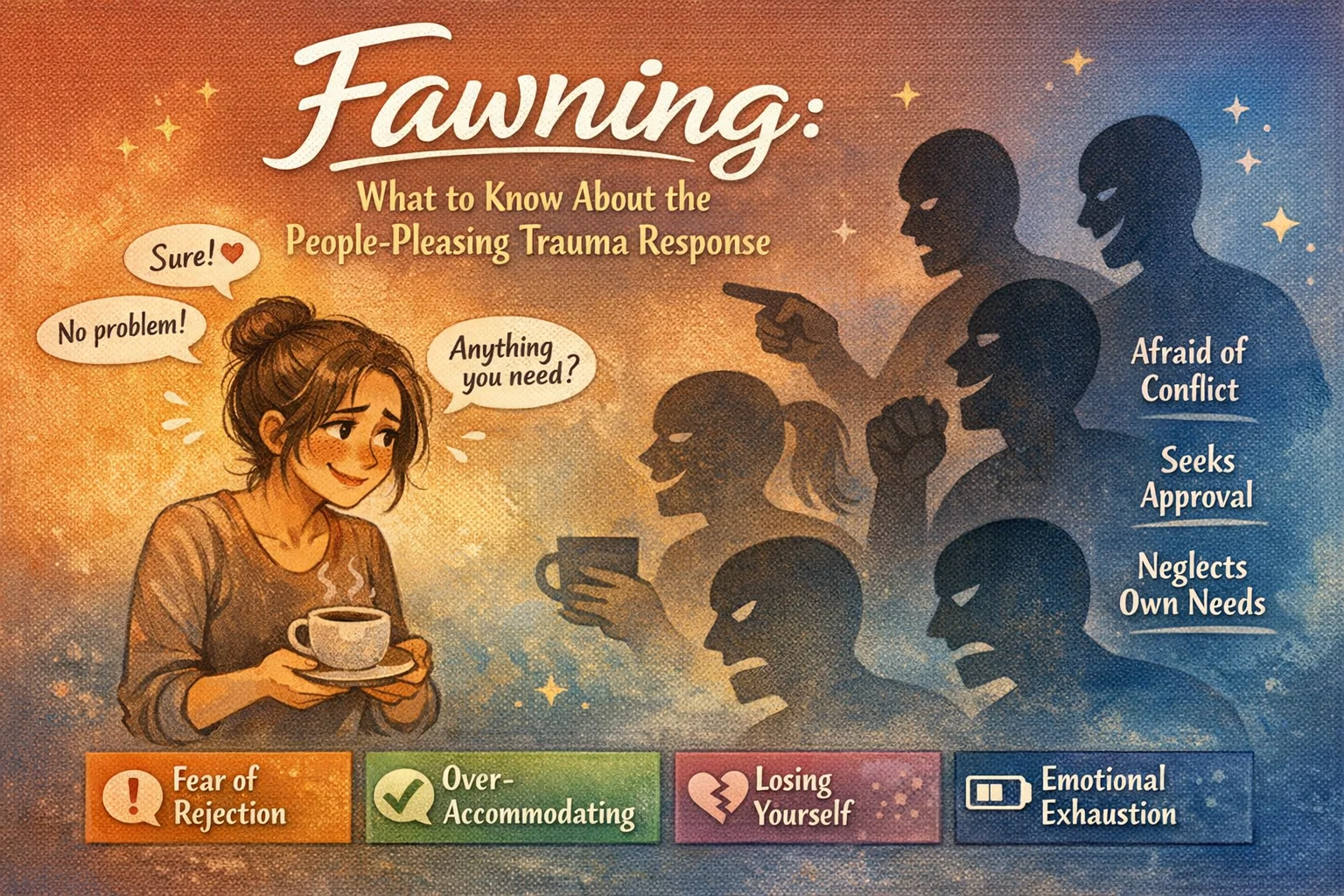

Fawning is a trauma response. It happens when someone tries to keep others happy in order to stay safe. Instead of fighting, running away, or freezing, a person who fawns tries to please others to avoid conflict, danger, or harm.
This response often develops after someone has experienced abuse, neglect, or repeated fear. It is not a choice. It is the body and mind trying to protect itself.
What Is Fawning?
You may have heard of the four fear responses: fight, flight, freeze, and fawn.
Fawning means trying to calm or please someone who feels threatening. The person may agree with everything, avoid disagreement, or put other people’s needs ahead of their own in order to prevent harm.
Many people who have been abused learn that staying agreeable keeps them safer. Over time, this becomes automatic.
It’s important to understand this clearly:
Fawning does not mean someone wanted abuse or agreed to it.
It means they were trying to survive.
Why People Fawn During Abuse
In abusive situations, especially long-term ones, victims often feel responsible for the abuser’s behavior. They may believe that if they behave “correctly,” the abuse will stop.
Abusers are not cruel all the time. Many abusive relationships follow a cycle:
-
A calm or loving phase
-
A build-up of tension
-
An abusive incident
-
Apologies or affection afterward
This can confuse the victim and make them believe they have control over the abuse. Fawning becomes a way to try to keep the peace and avoid danger.
In dangerous situations like assault or abduction, a person may also fawn to reduce harm. This is a natural survival response, not consent.
What Does Fawning Look Like?
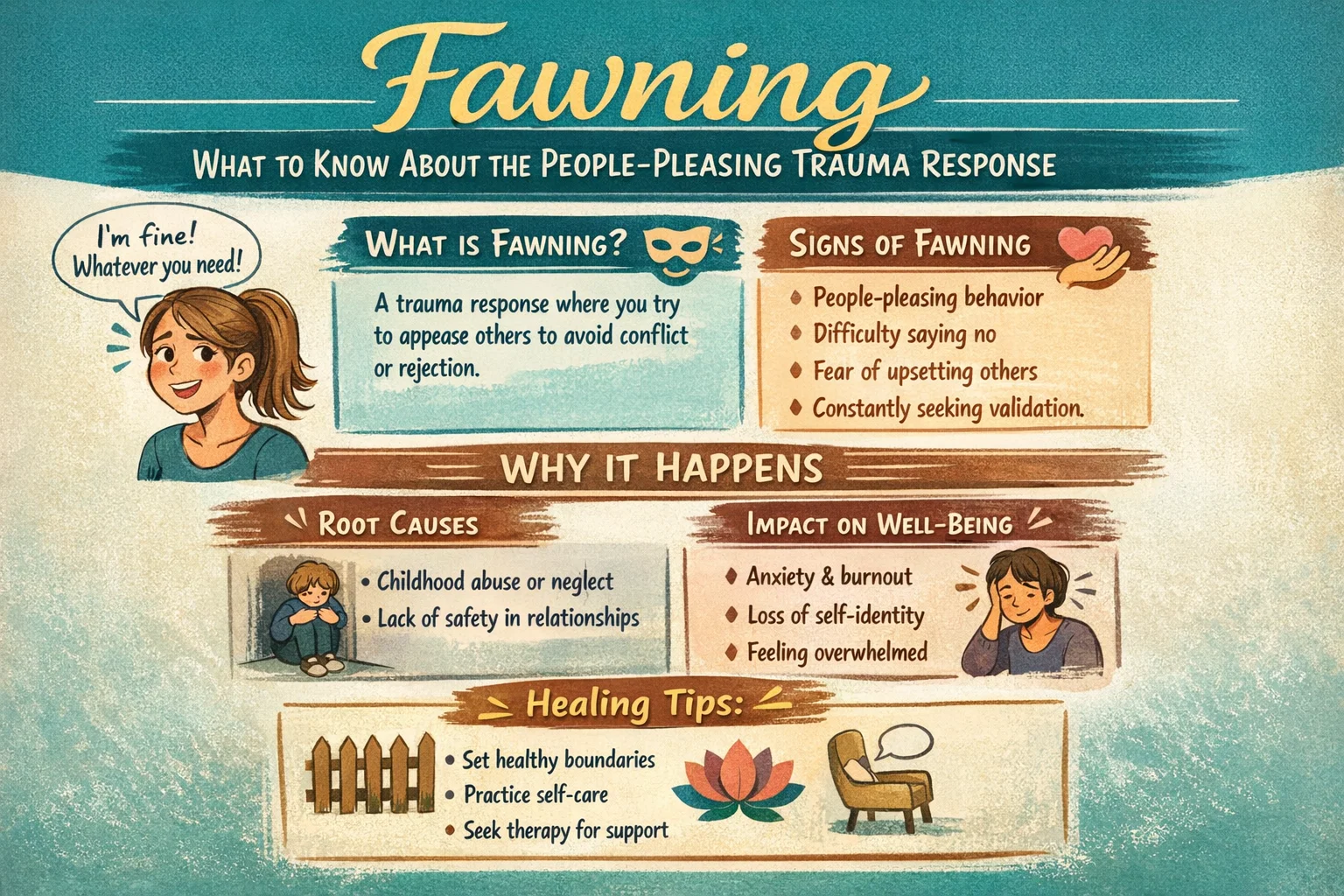
Fawning is often called people-pleasing, but it goes much deeper than being polite or kind.
Someone who fawns may:
-
Always put others first
-
Feel unable to say “no,” even when they want to
-
Agree with people even when they disagree inside
-
Ignore or deny their own needs
-
Feel anxious about disappointing others
-
Take responsibility for other people’s emotions or behavior
Most people people-please sometimes. For example, you might help your boss even if you’re tired. That’s normal.
Fawning becomes unhealthy when:
-
The behavior feels automatic
-
Fear or anxiety drives the need to please
-
Personal needs are constantly ignored
-
Boundaries feel impossible to set
People who fawn often struggle to know what they truly feel or want because they are so focused on others.
Examples of Fawning Behavior
Fawning can look different depending on the situation. Some common examples include:
-
Saying yes when you want to say no
-
Letting others make decisions for you
-
Avoiding conflict at all costs
-
Trying to fix or calm arguments you didn’t cause
-
Feeling responsible for keeping everyone happy
-
Struggling to set boundaries in relationships
These behaviors become fawning when they come from fear, not choice.
What Kind of Trauma Causes Fawning?
There is no single type of trauma that causes fawning. Different people respond to fear in different ways.
Fawning is most common in:
-
Childhood abuse or neglect
-
Emotionally or physically abusive relationships
-
Situations where leaving or fighting back was unsafe
-
Environments where love depended on obedience
When someone learns that pleasing others reduces danger, their nervous system remembers that. Even after the danger is gone, the response can remain.
This is why someone may fawn even in safe relationships. The body reacts based on past experiences, not the present moment.
Why It Can Be Hard to Leave Abusive Relationships
Fawning can make leaving abuse extremely difficult. Victims may:
-
Feel emotionally attached to the abuser
-
Believe they can “fix” the relationship
-
Doubt their own judgment
-
Fear what will happen if they stop pleasing the abuser
This emotional attachment is sometimes called a trauma bond. It forms because of repeated cycles of fear and relief.
If you or someone you know is experiencing abuse, help is available. Support services exist to help people stay safe and regain control.
What Does It Mean If Someone Is Fawning?
If someone is fawning, it usually means:
-
They learned this behavior to survive
-
They may have experienced abuse or fear in the past
-
Their nervous system is trying to protect them
Fawning does not mean someone is weak.
It means they adapted to survive.
Even if there is no current danger, the body may still react as if there is. This is why trauma responses can continue long after the trauma ends.
How Can I Stop Fawning?
Because fawning is linked to trauma, healing often involves addressing the past experiences that created the response.
Therapy can be very helpful. Trauma-focused therapies can help people:
-
Feel safe again
-
Understand their responses
-
Learn healthier ways to cope
-
Reconnect with their own needs and feelings
Stopping fawning takes time. Many people who fawn don’t even know what they want at first. Learning to identify personal needs, preferences, and boundaries is part of healing.
It’s important to be patient with yourself. Fawning once kept you safe. Now you are learning new ways to protect yourself.
How to Support Someone Who Fawns
People who fawn are often praised for being helpful, kind, or easygoing. This can make the behavior hard to notice.
If you want to support someone who fawns:
-
Encourage them to express their needs
-
Reassure them that disagreement is safe
-
Avoid pressuring them to please you
-
Be patient when they struggle to say what they want
If you feel hurt realizing someone fawns around you, remember this response may have nothing to do with you. Trauma responses can remain even in safe relationships.
For partners or families, therapy together can help improve communication and create emotional safety.
Key Takeaways
-
Fawning is a trauma response, not a personality flaw
-
It develops as a way to stay safe
-
People who fawn often ignore their own needs
-
Healing is possible with time, support, and therapy
-
Understanding and compassion make a big difference
If you recognize yourself in this, know that you are not broken. Your nervous system learned how to survive — and it can also learn how to feel safe again.


Leave a Comment