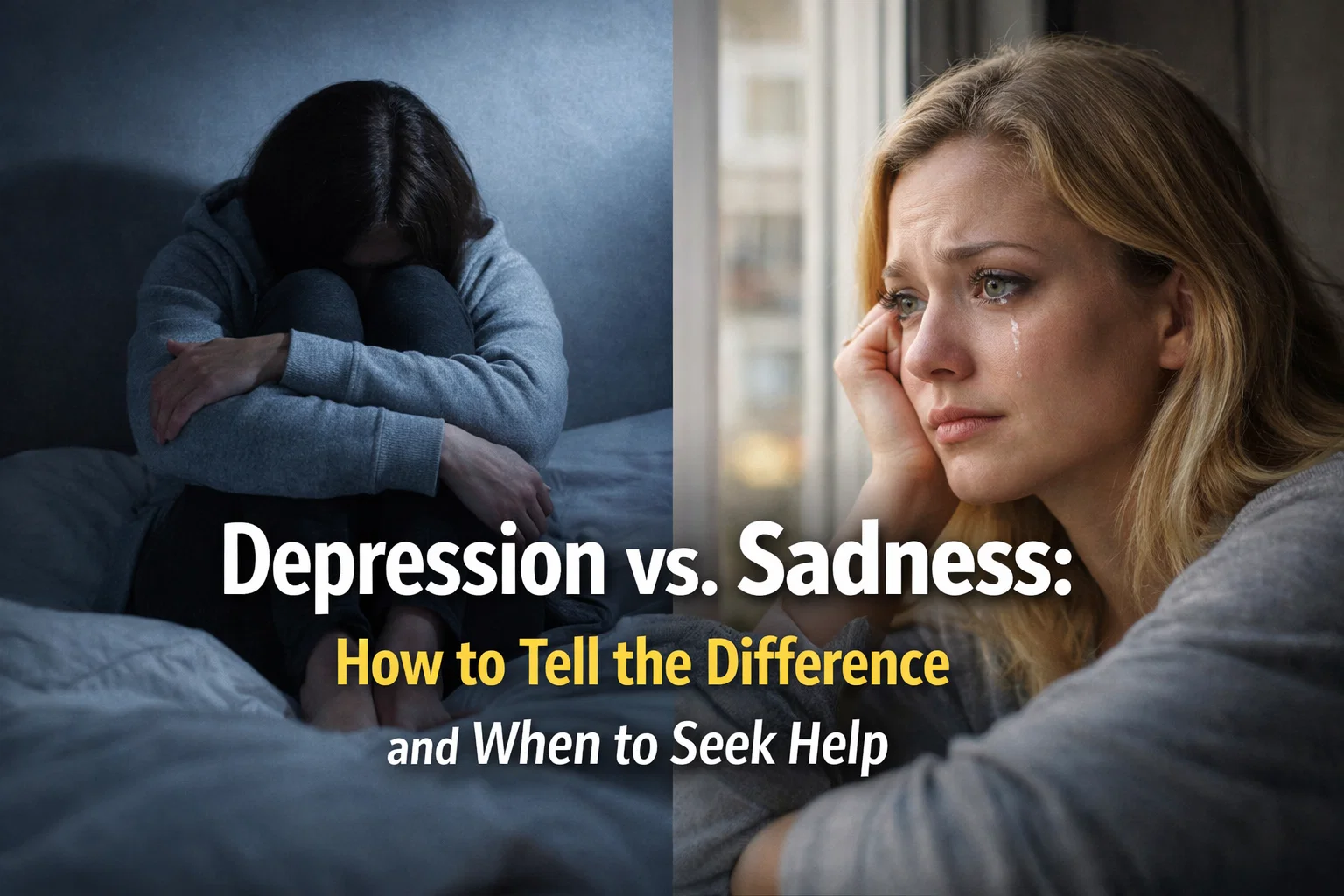

“I’m just feeling a bit down.” “I’ve been sad lately.” “I think I might be depressed.” These phrases are often used interchangeably in everyday conversation, but they describe fundamentally different experiences. Understanding the distinction between normal sadness and clinical depression can be the difference between unnecessary suffering and getting the help you need to feel better.
Sadness is a natural, healthy emotion that everyone experiences. Depression, on the other hand, is a serious mental health condition that affects how you think, feel, and function in daily life. While they share some surface similarities, the depth, duration, and impact of these experiences are vastly different.
In South Africa, where mental health stigma remains a significant barrier to seeking help, many people dismiss their depression as “just sadness” or try to push through without support. Others worry they’re overreacting to normal sadness and feel hesitant to reach out for help. This article will help you understand the crucial differences and recognize when professional support is needed.
Understanding Sadness: A Normal Human Emotion
Sadness is one of the fundamental human emotions, as natural and necessary as joy, anger, or fear. It’s your emotional response to loss, disappointment, or difficult circumstances. Sadness serves an important purpose: it signals that something matters to you, allows you to process difficult experiences, and often motivates you to make changes or seek support.
What Triggers Normal Sadness
Sadness typically has clear, identifiable triggers. You might feel sad after the end of a relationship, whether romantic or friendship; receiving disappointing news about work, education, or personal goals; losing someone or something important to you; experiencing rejection or criticism; watching or reading something emotionally moving; or feeling lonely or disconnected from others.
These triggers make sense in context. Your sadness is proportionate to what you’ve experienced, and most people would understand why you’re feeling down about the situation.
Characteristics of Healthy Sadness
When you’re experiencing normal sadness, certain patterns typically emerge. The sadness comes in waves rather than being constant—you might feel very sad at certain moments but find yourself distracted or even smiling at other times. You can still experience pleasure when engaged in activities you normally enjoy, even if you have to make an effort. Your sadness lessens over time as you process the loss or disappointment, though it may resurface occasionally.
You maintain hope that things will improve, even if you feel down right now. Your self-worth remains intact—you don’t feel fundamentally broken or worthless as a person. You can identify what you’re sad about when asked, and you’re able to seek and receive comfort from others.
Importantly, while sadness is uncomfortable, it doesn’t completely prevent you from meeting your basic responsibilities or caring for yourself. You might not feel like going to work or seeing friends, but you’re still able to do these things when necessary.
The Purpose of Sadness
Sadness isn’t a malfunction of your emotional system—it serves important functions. It signals that you need to slow down and process what’s happened, allowing you time to grieve, reflect, or adjust. Sadness often motivates you to seek connection and support from others, strengthening relationships. It helps you appreciate what you have by making you aware of what you’ve lost or what you’re missing.
Through sadness, you develop empathy and compassion for others going through similar experiences. It’s also part of how you learn and grow, helping you identify what matters to you and sometimes motivating important life changes.
Understanding Depression: More Than Just Feeling Sad
Depression, clinically known as major depressive disorder (MDD), is a mental health condition that goes far beyond normal sadness. It’s characterized by persistent low mood, loss of interest or pleasure in activities, and a range of other symptoms that significantly interfere with daily functioning.
Depression isn’t a sign of weakness, a character flaw, or something you can simply “snap out of.” It’s a legitimate medical condition that involves changes in brain chemistry, hormones, and neural pathways. Just as you wouldn’t blame someone for having diabetes or asthma, depression is not a choice or a personal failing.
Core Symptoms of Clinical Depression
According to diagnostic criteria, depression involves experiencing five or more of the following symptoms for at least two weeks, with at least one symptom being either persistent sadness or loss of interest:
Persistent depressed mood most of the day, nearly every day. This isn’t just feeling sad occasionally—it’s a heavy, pervasive sense of emptiness, hopelessness, or despair that colors everything.
Loss of interest or pleasure in activities you used to enjoy (called anhedonia). Things that once brought you joy—hobbies, time with friends, favorite foods, intimate moments with your partner—now feel flat and meaningless.
Significant weight changes or appetite changes when not dieting. You might lose your appetite entirely and lose weight unintentionally, or turn to food for comfort and gain weight. Some people with depression find that food loses its taste or that eating feels like a chore.
Sleep disturbances that are persistent and distressing. This might mean insomnia—difficulty falling asleep, staying asleep, or waking very early and being unable to return to sleep. Alternatively, you might experience hypersomnia, sleeping far more than usual but still feeling exhausted.
Psychomotor changes that others can observe. You might move and speak more slowly than usual (psychomotor retardation), or feel physically agitated and restless, unable to sit still (psychomotor agitation).
Fatigue or loss of energy nearly every day. Even simple tasks like showering or making breakfast feel exhausting. You might feel physically heavy, as though you’re moving through water.
Feelings of worthlessness or excessive, inappropriate guilt. You might fixate on minor failings, blow past mistakes out of proportion, or feel guilty about things that aren’t your responsibility. Your inner critic becomes harsh and relentless.
Difficulty concentrating, thinking clearly, or making decisions. Your mind feels foggy, you can’t focus on conversations or tasks, and even small decisions feel overwhelming. You might read the same paragraph repeatedly without absorbing it, or struggle to follow television shows you used to enjoy.
Recurrent thoughts of death or suicide. This doesn’t always mean having a specific plan to end your life. It might start as wishing you wouldn’t wake up, feeling that others would be better off without you, or having intrusive thoughts about death and dying.
Types of Depression
Depression isn’t a one-size-fits-all condition. Several different presentations exist:
Major Depressive Disorder is what most people think of when they hear “depression”—the condition described by the symptoms above, lasting at least two weeks and significantly affecting functioning.
Persistent Depressive Disorder (Dysthymia) involves chronic depression lasting two years or longer. The symptoms might be less severe than major depression but their persistence is equally debilitating.
Seasonal Affective Disorder (SAD) is depression that follows a seasonal pattern, typically occurring during winter months when daylight is limited. While less commonly discussed in South Africa’s climate, it can still affect people, particularly in regions with more dramatic seasonal changes.
Postpartum Depression affects some women after giving birth. It’s more severe and longer-lasting than the “baby blues” and requires professional treatment.
Atypical Depression involves temporary mood improvement in response to positive events, increased appetite and sleep, heavy feelings in limbs, and sensitivity to rejection.
Depression with Psychotic Features includes delusions or hallucinations alongside depressive symptoms, requiring immediate professional intervention.
Key Differences Between Sadness and Depression
Understanding the distinctions can help you assess your own experiences or those of loved ones.
Duration and Persistence
Sadness is temporary, lasting hours, days, or sometimes weeks, but gradually lessening over time. Even when you’re going through a difficult period, sadness fluctuates—you have better moments and worse moments.
Depression persists for at least two weeks and often much longer. The low mood is constant and pervasive, present most of the day, nearly every day. Unlike sadness, it doesn’t lift when circumstances improve or positive things happen.
Intensity and Severity
Sadness, while painful, exists on a spectrum that feels proportionate to what triggered it. You feel sad, but you don’t necessarily feel hopeless or fundamentally broken.
Depression is characterized by an overwhelming, suffocating quality. The intensity often feels disproportionate to circumstances or exists without any clear trigger. It’s not just feeling down—it’s feeling like you’re trapped in a dark pit with no way out.
Impact on Daily Functioning
Sadness allows you to continue with most daily activities, even if you have to push yourself. You can still work, care for yourself, maintain relationships, and handle responsibilities, though you might not feel like doing so.
Depression significantly impairs your ability to function. Basic self-care like showering, eating, or getting out of bed becomes genuinely difficult. Work performance suffers, relationships deteriorate, and responsibilities pile up because you simply can’t manage them.
Ability to Experience Pleasure
Sadness doesn’t eliminate your capacity for joy. If something genuinely funny or pleasant happens, you can still laugh or smile. Activities you enjoy can still provide some comfort or distraction, even if they don’t completely eliminate the sadness.
Depression involves anhedonia—the inability to experience pleasure even from things you normally love. Your favorite meal tastes like nothing. Time with friends feels empty. Achievements feel meaningless. Nothing brings you joy or satisfaction.
Self-Perception
Sadness doesn’t fundamentally alter how you view yourself. You might be sad about something that happened, but you don’t see yourself as worthless or fundamentally flawed.
Depression often involves harsh self-judgment, feelings of worthlessness, and the belief that you’re a burden to others. Your entire self-concept becomes negative, and you may feel deep shame about your struggles.
Hope for the Future
Sadness allows you to imagine feeling better eventually. You might think “This is hard right now, but it will get easier with time” or “I won’t always feel this way.”
Depression creates a sense of hopelessness where you can’t imagine ever feeling better. The future looks bleak and empty. You might think “This is just how I am” or “Nothing will ever change.”
Physical Symptoms
Sadness might involve some physical symptoms like tiredness or changes in appetite, but these are usually mild and don’t persist beyond the emotional experience.
Depression involves significant, persistent physical symptoms: chronic fatigue, sleep disturbances, appetite changes, unexplained aches and pains, digestive issues, and psychomotor changes. Your body feels heavy and unresponsive.
Response to Support and Activities
Sadness typically improves when you talk to supportive friends or family, engage in self-care, or participate in activities you enjoy. Connection and distraction help.
Depression doesn’t reliably respond to these interventions. You might want to feel better, but support from others and attempts at self-care don’t lift the depression. You may isolate yourself despite knowing connection would help.
Depression in the South African Context
Several factors make depression particularly complex in South Africa, and understanding these contextual elements is important for recognizing and addressing depression.
Stigma and Mental Health Awareness
Mental health stigma remains significant in many South African communities. Depression might be dismissed as weakness, laziness, or lack of faith. People often hear “just pray about it,” “others have it worse,” or “you need to be stronger.”
This stigma prevents many people from seeking help or even acknowledging their depression. Men, in particular, may be less likely to recognize or admit to depression due to cultural expectations around masculinity and strength.
Economic Stress and Uncertainty
South Africa’s high unemployment rate, economic inequality, and financial pressures create chronic stress that can trigger or worsen depression. The burden of being the primary breadwinner for an extended family, uncertainty about job security, or the inability to meet basic needs can contribute to feelings of hopelessness and worthlessness that characterize depression.
When you’re struggling with legitimate, serious life circumstances, it can be difficult to recognize that you’re also experiencing clinical depression requiring treatment. The two aren’t mutually exclusive—difficult circumstances can trigger depression, and depression makes it harder to cope with challenges.
Cultural Expressions of Distress
Depression doesn’t always look the same across cultures. In some South African communities, depression might be expressed primarily through physical symptoms—headaches, body pains, fatigue—rather than emotional language. This is sometimes called somatic presentation.
Some people describe depression using culturally specific terms or frameworks that don’t directly translate to Western psychiatric language, which doesn’t make the experience any less valid or serious.
Access to Mental Healthcare
While urban areas of South Africa have increasing access to mental health services, many rural communities have limited resources. The cost of private therapy can be prohibitive, and public mental health services are often overextended.
This reality makes it even more important to recognize depression early and understand all available options for treatment, including community resources, telephone counseling, and online support.
Trauma and Historical Context
South Africa’s history of apartheid, ongoing crime and violence, and social upheaval has created collective trauma that can manifest as depression for many individuals. The intersection of personal and historical trauma requires culturally sensitive approaches to understanding and treating depression.
When Sadness Might Indicate Depression
Sometimes what begins as normal sadness in response to a difficult event can develop into clinical depression. Certain warning signs suggest that sadness is crossing into depression territory:
Your sadness intensifies over time rather than gradually improving, even as you move further from the triggering event. You find yourself unable to function in one or more important areas of life—work, relationships, self-care. The sadness is accompanied by increasing feelings of worthlessness, hopelessness, or thoughts of death.
You’re losing interest in everything, not just things related to what made you sad. Physical symptoms like sleep problems, appetite changes, and fatigue are becoming severe and persistent. You’re increasingly isolating yourself and pulling away from support systems.
You notice that nothing helps—talking to friends, activities you enjoy, self-care practices that usually work—none of it makes a difference. You’re having difficulty imagining a future or making plans because everything feels meaningless.
If you recognize several of these patterns, it’s time to consider that you might be experiencing depression rather than sadness, and professional support could help.
What About “Situational Depression”?
You might hear the term “situational depression” or “reactive depression” used to describe depression triggered by a specific event or circumstance—a breakup, job loss, death of a loved one, financial crisis, or health diagnosis.
While these situations certainly cause sadness and can trigger clinical depression, the term “situational depression” can be misleading. It suggests that the depression is temporary and will resolve once the situation improves. However, depression that begins in response to life circumstances can become self-sustaining and require treatment even after the original trigger is resolved.
The key is not whether depression has a clear trigger, but whether you’re experiencing the symptoms and impairment characteristic of clinical depression. If you meet the criteria for depression, treatment can help regardless of whether there’s an obvious external cause.
Assessment: Evaluating Your Experience
If you’re wondering whether what you’re experiencing is sadness or depression, consider these questions:
How long have you been feeling this way? If it’s been less than two weeks and you notice improvement, it’s more likely sadness. If it’s been two weeks or longer with no improvement, consider depression.
Can you identify what’s causing these feelings? Clear triggers suggest sadness, though depression can also have triggers. Depression sometimes appears without any obvious cause.
Are you still able to enjoy things? If yes, even occasionally, it points more toward sadness. If you’ve lost all capacity for pleasure, depression is more likely.
How is your daily functioning? If you can still handle responsibilities despite feeling sad, it’s likely sadness. If you’re struggling with basic tasks and responsibilities, consider depression.
What’s your energy level? Tiredness that resolves with rest suggests sadness. Profound, persistent exhaustion regardless of sleep suggests depression.
How do you view yourself? Intact self-worth points to sadness. Feeling worthless, guilty, or like a burden suggests depression.
Can you imagine feeling better? Hope for improvement suggests sadness. Hopelessness and inability to imagine improvement suggests depression.
Have supportive activities helped? If talking to friends, self-care, or enjoyable activities provide some relief, it’s likely sadness. If nothing helps, consider depression.
Remember, these questions are for reflection and awareness, not self-diagnosis. A mental health professional can provide a proper assessment.
When to Seek Professional Help
Knowing when to reach out for professional support is crucial. Consider seeking help if:
You’ve been feeling depressed for two weeks or longer with no improvement. Your symptoms are interfering with work, school, relationships, or self-care. You’re having thoughts of death, suicide, or self-harm. You’re using alcohol or substances to cope with your feelings.
You’ve lost significant weight unintentionally or your eating patterns have changed dramatically. You’re sleeping much more or much less than usual and it’s affecting your functioning. You feel hopeless about the future or like you’re a burden to others. You’ve withdrawn from friends, family, and activities that used to matter to you.
Your friends or family members have expressed concern about you. You’re experiencing physical symptoms like chronic pain, headaches, or digestive issues without medical explanation. You’ve tried self-help strategies for several weeks without improvement.
Importantly, you don’t need to wait until things are severe to seek help. Early intervention often leads to better outcomes, and a therapist can help you determine whether you’re experiencing depression or complicated grief, adjustment difficulties, or another concern.
Treatment Options for Depression
Depression is highly treatable, and most people who seek help experience significant improvement. Treatment typically involves one or a combination of the following:
Psychotherapy
Several types of therapy are effective for depression:
Cognitive Behavioral Therapy (CBT) helps you identify and change negative thought patterns and behaviors that maintain depression. It’s one of the most researched and effective treatments for depression.
Interpersonal Therapy (IPT) focuses on improving relationships and addressing life changes that may be contributing to depression.
Psychodynamic Therapy explores how past experiences and unconscious patterns affect current emotions and behaviors.
Behavioral Activation specifically focuses on increasing engagement in meaningful activities, even when you don’t feel like it, to interrupt the cycle of depression.
Therapy typically involves weekly sessions for several months, though duration varies based on individual needs.
Medication
Antidepressant medications can be very effective, particularly for moderate to severe depression. Common types include:
SSRIs (Selective Serotonin Reuptake Inhibitors) like fluoxetine, sertraline, and citalopram are often first-line treatments with relatively few side effects.
SNRIs (Serotonin-Norepinephrine Reuptake Inhibitors) like venlafaxine work on two neurotransmitter systems.
Other antidepressants include bupropion, mirtazapine, and others that work through different mechanisms.
Medication typically takes 4-6 weeks to show full effects. Finding the right medication sometimes requires trying different options. Medication is most effective when combined with therapy.
Lifestyle Modifications
While not treatments on their own, lifestyle factors significantly impact depression:
Regular exercise has been shown to be as effective as medication for mild to moderate depression. Even 20-30 minutes of walking several times weekly can help.
Sleep hygiene practices can improve sleep quality, which often improves mood.
Nutrition matters—a balanced diet supports brain health and mood regulation.
Social connection, even when you don’t feel like it, provides crucial support and breaks isolation.
Routine and structure can provide stability when depression makes everything feel chaotic.
Sunlight exposure helps regulate circadian rhythms and mood, particularly important for seasonal patterns.
Support Groups and Peer Support
Connecting with others who understand depression can reduce isolation and provide practical strategies. Support groups are available through organizations like SADAG (South African Depression and Anxiety Group).
Hospitalization
In severe cases, particularly when suicide risk is high or when depression includes psychotic features, hospitalization may be necessary to ensure safety and provide intensive treatment.
Supporting Someone with Depression
If someone you care about is experiencing depression, your support can make a significant difference:
Educate yourself about depression so you understand what they’re going through. Listen without judgment when they want to talk, without trying to fix or minimize their experience. Avoid unhelpful comments like “just think positive,” “others have it worse,” or “you need to try harder.”
Offer practical help with tasks that feel overwhelming to them—groceries, childcare, household chores. Encourage professional help gently, and offer to help them find resources or accompany them to appointments.
Be patient—recovery takes time and isn’t linear. Take care of yourself too—supporting someone with depression can be draining, and you need to maintain your own wellbeing.
Take suicide talk seriously—if they express thoughts of suicide, don’t dismiss it or promise to keep it secret. Help them get immediate professional help.
Moving Forward: Hope and Recovery
Whether you’re experiencing sadness or depression, remember that difficult feelings are part of the human experience. Sadness will naturally resolve with time and support. Depression requires active treatment, but recovery is absolutely possible.
Depression isn’t a permanent state, though it can feel that way when you’re in it. With appropriate treatment—therapy, medication, lifestyle changes, support—most people experience significant improvement. Some people recover completely, while others learn to manage depression as a chronic condition that comes and goes.
The first step is often the hardest: acknowledging that what you’re experiencing is serious and deserves attention. You’re not being dramatic, weak, or attention-seeking. Depression is a real medical condition, and seeking help is a sign of strength and self-care.
If you’re not sure whether what you’re experiencing is sadness or depression, talking to a mental health professional can provide clarity. They can assess your symptoms, provide a diagnosis if appropriate, and help you develop a treatment plan.
Your mental health matters just as much as your physical health. You deserve support, compassion, and effective treatment. Don’t wait until things become unbearable to reach out for help.
If you’re experiencing depression or having thoughts of suicide, please reach out for help. In South Africa, you can contact:
- SADAG (South African Depression and Anxiety Group): 0800 567 567
- Suicide Crisis Line: 0800 567 567
- Lifeline: 0861 322 322
- For emergencies, go to your nearest hospital emergency department
Remember, asking for help is a sign of courage, not weakness.


Leave a Comment