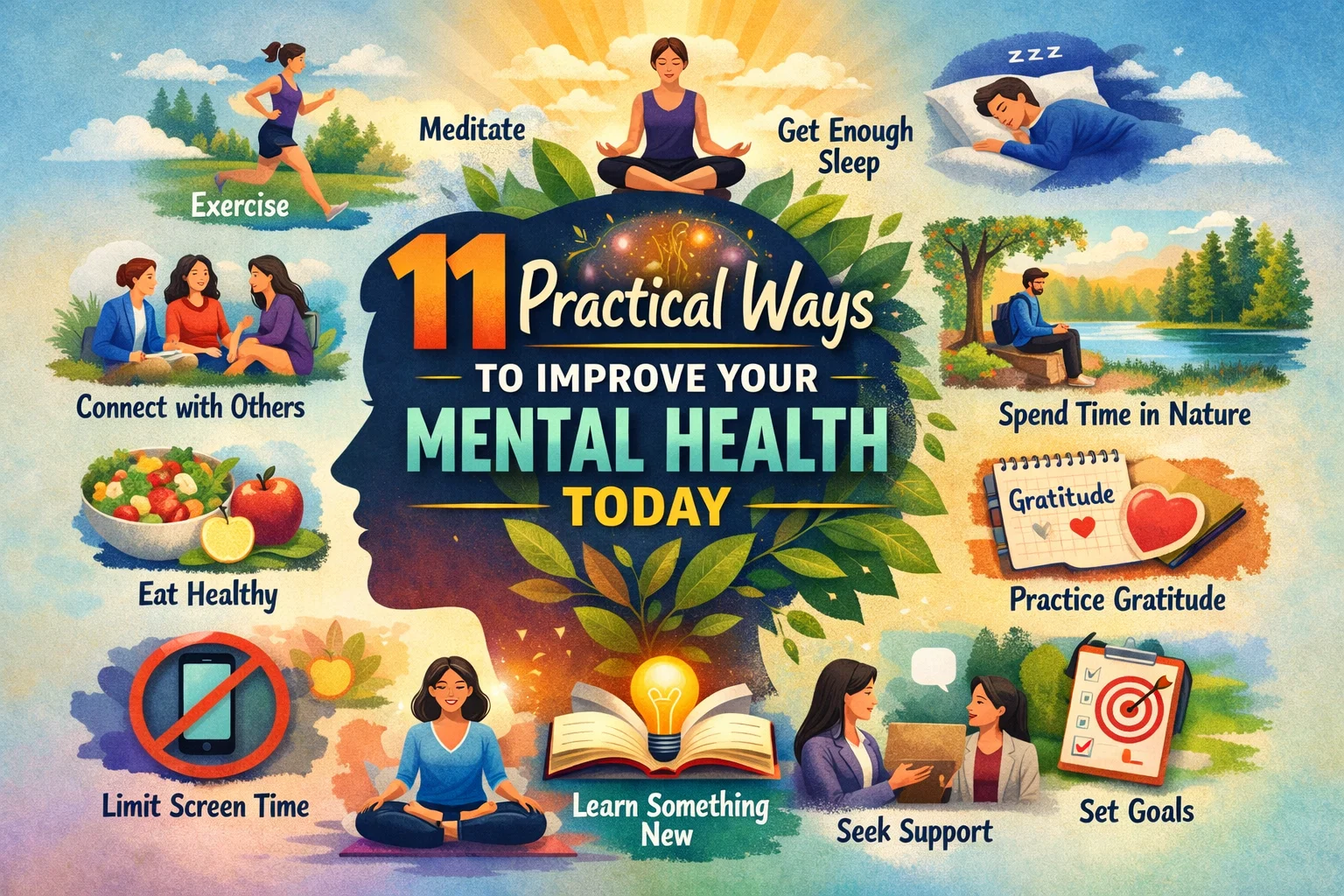

You don’t need to wait for months of therapy or major life changes to start feeling better. While professional help is valuable for significant mental health challenges, there are concrete steps you can take right now—today—that can improve your emotional wellbeing and build resilience for the challenges ahead.
Mental health isn’t just the absence of mental illness. It’s your overall emotional, psychological, and social wellbeing—how you think, feel, and navigate daily life. In South Africa, where many of us face economic stress, safety concerns, load shedding, and ongoing social challenges, actively nurturing your mental health isn’t a luxury—it’s essential.
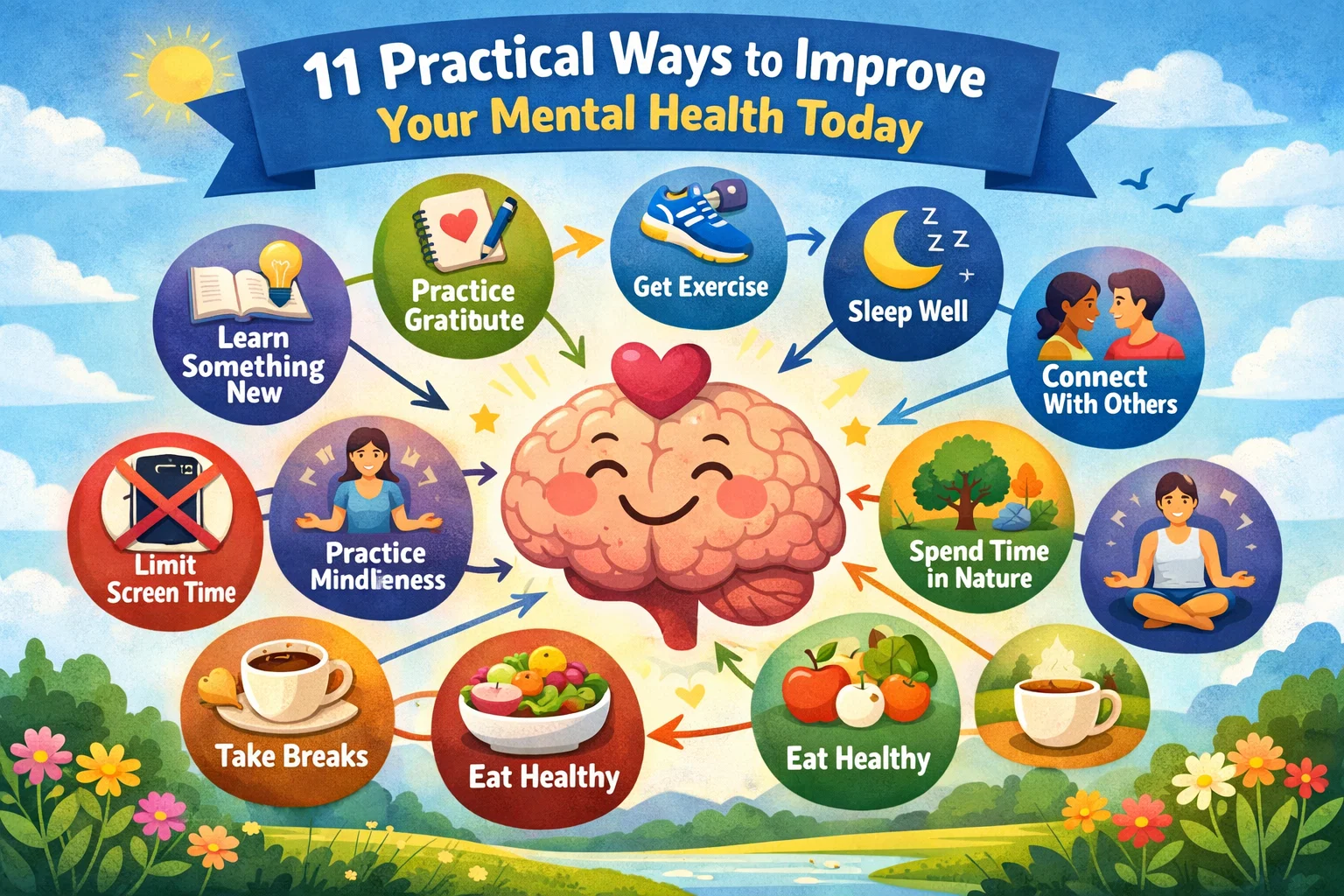
This guide offers eleven practical, evidence-based strategies you can implement immediately to strengthen your mental health. These aren’t quick fixes that promise to eliminate all difficulties, but rather sustainable practices that build emotional resilience and improve your quality of life over time.
Understanding Mental Health
Before we dive into specific strategies, let’s clarify what we mean by mental health and why it matters.
What Is Mental Health?
Mental health encompasses your emotional, psychological, and social wellbeing. It influences:
- How you think and process information
- How you feel and regulate emotions
- How you act and make decisions
- How you handle stress and adversity
- How you relate to others
- How you make choices
Like physical health, mental health exists on a continuum. You can have good mental health while occasionally struggling, and you can work on improving mental health even without a diagnosed disorder.
Signs of Good Mental Health
When your mental health is strong, you generally:
- Experience a sense of contentment and satisfaction with life
- Can laugh, have fun, and enjoy yourself
- Find meaning and purpose in your activities and relationships
- Adapt to change and cope with challenges
- Maintain supportive, positive relationships
- Feel confident in yourself and your abilities
- Engage productively with work, school, or daily responsibilities
This doesn’t mean you never experience difficult emotions or face hardships—everyone does. Good mental health means having resilience to navigate challenges without being completely derailed.
Warning Signs of Declining Mental Health
Pay attention if you notice:
- Withdrawing from friends, family, or social activities
- Loss of energy or constant fatigue
- Feeling emotionally numb or empty
- Unexplained physical aches and pains
- Feeling hopeless about the future
- Increased alcohol or substance use
- Unusual forgetfulness or confusion
- Irritability or mood swings
- Persistent worry or anxiety
- Conflicts in relationships
- Difficulty concentrating
- Changes in eating patterns (much more or much less)
- Sleep disturbances (insomnia or excessive sleep)
- Thoughts of self-harm
If you recognize several of these signs, consider seeking professional support. These strategies can help, but they work best alongside appropriate professional treatment when needed.
11 Ways to Strengthen Your Mental Health
1. Practice Self-Compassion
When you’re struggling, your inner critic often becomes louder. You might berate yourself for not being productive enough, strong enough, or positive enough. This self-criticism only adds to your burden.
Self-compassion means treating yourself with the same kindness you’d offer a good friend going through difficulties.
How to practice:
- Notice when you’re being self-critical. What are you telling yourself?
- Ask: “Would I speak this way to a friend in this situation?”
- Reframe harsh self-talk into supportive language: Instead of “I’m so weak for struggling,” try “I’m going through something difficult, and it’s okay to struggle.”
- Acknowledge that imperfection is part of being human
- Give yourself permission to not be okay sometimes
South African context: In cultures that emphasize strength and resilience, admitting struggle can feel like weakness. Remember that even the strongest people need compassion, especially from themselves.
2. Move Your Body Regularly
Physical activity is one of the most powerful interventions for mental health, as effective as medication for mild to moderate depression and anxiety.
Why it works: Exercise releases endorphins (feel-good chemicals), reduces stress hormones, improves sleep, boosts self-esteem, and provides a healthy outlet for tension and worry.
How to start:
- You don’t need a gym membership or expensive equipment
- Aim for 30 minutes of movement, 3-5 times weekly
- Choose activities you actually enjoy: walking, dancing, gardening, playing soccer, cycling, swimming
- Start small—even 10 minutes counts
- Walk during lunch breaks or after dinner
- Dance to your favorite music at home
- Do household chores energetically
- Take stairs instead of lifts when possible
South African options: Walk in your neighborhood or local park, join community soccer games, try outdoor activities like hiking Table Mountain or Drakensberg trails, swim at public pools or beaches, or follow free YouTube workout videos during load shedding (download them beforehand).
3. Prioritize Quality Sleep
Sleep and mental health are bidirectionally connected—poor sleep worsens mental health, and poor mental health disrupts sleep. Prioritizing sleep is one of the highest-impact changes you can make.
Aim for 7-9 hours nightly. Losing even one hour significantly affects mood, concentration, stress resilience, and emotional regulation.
Sleep hygiene practices:
- Maintain consistent sleep and wake times, even on weekends
- Create a bedtime routine that signals sleep time (reading, stretching, warm bath)
- Make your bedroom dark, quiet, and cool
- Avoid screens 1-2 hours before bed (or use blue light filters)
- Limit caffeine after midday
- Avoid heavy meals and alcohol close to bedtime
- Get morning sunlight exposure to regulate your circadian rhythm
Load shedding adaptations: Invest in battery-powered fans or dress in layers for temperature control. Use battery-operated lights or candles for your evening routine. Download calming audio or meditation apps to use offline.
4. Connect With Others
Humans are fundamentally social creatures. Loneliness and social isolation significantly harm mental health, while meaningful connections protect and strengthen it.
Why it matters: Supportive relationships provide emotional support, practical help, different perspectives, sense of belonging, and opportunities for joy and laughter.
How to strengthen connections:
- Reach out to someone you haven’t spoken to in a while
- Schedule regular catch-ups with friends or family
- Join clubs, groups, or activities based on your interests
- Volunteer for causes you care about
- Attend community events or religious services
- Be vulnerable—share what you’re actually experiencing, not just surface-level updates
- Make time for face-to-face or phone conversations, not just texts
- Offer help to others, which builds connection and purpose
For introverts: You still need connection, even if in smaller doses. Focus on quality over quantity—deep connection with a few people rather than surface-level interaction with many.
South African strength: Ubuntu philosophy emphasizes interconnection. Lean into this cultural strength by nurturing your community bonds while also allowing yourself to receive support, not just give it.
5. Practice Mindfulness and Present-Moment Awareness
Anxiety pulls you into feared futures; depression pulls you into painful pasts. Mindfulness anchors you in the only moment where you have actual power—right now.
What is mindfulness: Paying attention to the present moment with openness and without judgment. Noticing your thoughts, feelings, and sensations without getting caught up in them.
Simple mindfulness practices:
- Mindful breathing: Focus on your breath for 2-5 minutes. When your mind wanders, gently return to breathing.
- Mindful eating: Eat one meal slowly, noticing flavors, textures, smells, and sensations.
- Mindful walking: Walk slowly, noticing each step, the ground beneath your feet, sounds around you.
- Mindful daily activities: Wash dishes, shower, or drink coffee with full attention to the experience.
- Body scan: Progressively notice sensations in each part of your body from toes to head.
Start small: Even 30 seconds of mindful breathing counts. Build from there.
Apps for guidance: Headspace, Calm, Insight Timer (many offer free content).
6. Spend Time in Nature
Nature has remarkable mental health benefits, reducing stress, anxiety, and depression while improving mood, focus, and overall wellbeing.
Why it works: Natural environments calm your nervous system, provide perspective, engage your senses in present moment, and offer beauty and awe that lift your spirits.
How to incorporate nature:
- Walk in parks or gardens
- Visit beaches, rivers, or dams
- Hike local trails
- Sit under a tree
- Garden or tend plants
- Watch sunrises or sunsets
- Open windows to hear birds and feel fresh air
- Bring nature inside with plants
South African advantages: Our country’s natural beauty is extraordinary. Even in cities, you can find parks, botanical gardens, or nature reserves. Use them.
7. Keep a Journal
Writing helps you process emotions, gain clarity, track patterns, and release thoughts swirling in your head.
Benefits of journaling:
- Organizes chaotic thoughts and feelings
- Provides emotional release
- Helps identify triggers and patterns
- Tracks progress over time
- Solves problems by working through them on paper
- Reduces rumination
How to start:
- Write for just 10 minutes, once or twice weekly
- Free-write whatever comes to mind—no rules, no editing
- Try prompts: “I’m feeling…”, “Today I’m grateful for…”, “Something challenging right now is…”, “I’m proud of myself for…”
- Don’t worry about grammar, spelling, or making sense
- Keep it private so you can be completely honest
Important: If you write about painful topics, spend a few minutes noting how you’re coping or want to cope. Don’t just dwell in the pain without processing it.
8. Establish Routines and Structure
When mental health struggles, everything can feel chaotic and overwhelming. Routine provides stability, reduces decision fatigue, and creates predictability.
Why routines help:
- Reduce the mental energy needed for basic decisions
- Create a sense of control amid chaos
- Ensure important activities (sleep, meals, movement) happen
- Provide accomplishment through completing routine tasks
- Signal to your brain what to expect, reducing anxiety
Build helpful routines:
- Morning routine: Consistent wake time, breakfast, movement, or mindfulness
- Evening routine: Dinner, unwinding activities, consistent bedtime
- Daily non-negotiables: Meals, medication if prescribed, basic hygiene, brief movement
- Weekly structure: Designated days for grocery shopping, laundry, social activities
Keep it simple: Routines should support you, not become another source of pressure. Start with 2-3 simple elements.
9. Limit Alcohol and Avoid Self-Medication
When you’re struggling, alcohol or substances might seem to help temporarily. In reality, they worsen mental health significantly.
Why substances harm mental health:
- Alcohol is a depressant that worsens depression and anxiety
- Substances disrupt sleep quality
- They create dependency, adding to problems
- They prevent you from developing healthy coping skills
- They impair judgment and can lead to harmful behaviors
- Withdrawal worsens anxiety and mood
Healthier coping alternatives:
- Physical activity
- Talking with trusted people
- Creative expression (art, music, writing)
- Mindfulness or meditation
- Engaging in hobbies you enjoy
If you’re using substances to cope: This is a sign you need additional support. Reach out to a healthcare provider or SADAG (0800 567 567) for help.
10. Practice Gratitude
When struggling, your brain naturally focuses on negatives and threats. Deliberately noticing positives balances this negativity bias and improves mood.
Research shows gratitude:
- Reduces depression and anxiety
- Increases happiness and life satisfaction
- Improves physical health
- Strengthens relationships
- Enhances sleep quality
How to practice gratitude:
- Each evening, name three things you’re grateful for (can be tiny: warm tea, sunshine, a text from a friend)
- Keep a gratitude journal
- Tell people you appreciate them
- Notice small pleasures throughout the day
- In difficult moments, ask “What’s one thing going okay right now?”
Important: Gratitude doesn’t deny pain or struggle. You can simultaneously acknowledge difficulties while noticing what’s working.
11. Seek Professional Help When Needed
Therapy isn’t just for crisis or severe mental illness—it’s for anyone wanting to strengthen their mental health, work through challenges, or live more fully.
Consider therapy if:
- You’ve tried self-help strategies without improvement
- Symptoms persist or worsen
- Mental health impacts work, relationships, or daily functioning
- You’re experiencing thoughts of self-harm
- You want to understand yourself better
- You’re navigating major life transitions
- You want to break unhealthy patterns
Types of support available:
- Private psychologists or counselors
- Community health centers
- Online therapy platforms
- Support groups
- Employee assistance programs
- SADAG services (0800 567 567)
Therapy works: Research consistently shows therapy effectively treats depression, anxiety, trauma, and many other mental health challenges. It’s an investment in yourself that pays dividends across your entire life.
Creating Your Personal Mental Health Plan
You don’t need to implement all eleven strategies at once. That would be overwhelming and unsustainable.
Instead:
- Choose 2-3 strategies that resonate most with you or seem most achievable right now.
- Start small: Commit to tiny, manageable versions. Five minutes of movement, one gratitude note, ten minutes of journaling.
- Be consistent: Daily practice of small actions creates more benefit than occasional large efforts.
- Track your practice: Note what you’re doing and how you’re feeling. This builds awareness of what helps.
- Be patient: Mental health improvement takes time. Notice small shifts rather than expecting dramatic transformation.
- Adjust as needed: If something isn’t working, try a different strategy. There’s no one right approach.
- Celebrate small wins: Acknowledge every step you take toward better mental health.
When Self-Help Isn’t Enough
These strategies are powerful tools, but they have limits. Professional help is important if:
- Symptoms are severe or persistent despite your efforts
- You’re having thoughts of self-harm or suicide
- Mental health significantly impairs your functioning
- You’re using substances to cope
- You’ve experienced trauma that continues affecting you
- You want deeper understanding and healing
Seeking help is strength, not weakness. It means you’re taking your wellbeing seriously and accessing tools beyond what you can provide yourself.
Moving Forward
Improving mental health is a journey, not a destination. There will be good days and difficult days. Progress isn’t linear—setbacks are normal and don’t erase your progress.
The goal isn’t perfection or constant happiness. It’s building resilience, developing healthy coping skills, and creating a life with more moments of contentment, connection, and meaning despite inevitable challenges.
You deserve to feel well. You deserve support. You deserve to invest in your mental health with the same care you’d give your physical health.
Start today. Pick one small step from this list. Then another. And another. Over time, these small steps compound into significant transformation.
Your mental health matters. And you have more power to influence it than you might realize.
If you’re struggling with your mental health:
- SADAG: 0800 567 567 (free counseling and referrals)
- Lifeline: 0861 322 322
- Suicide Crisis Line: 0800 567 567
You don’t have to face this alone. Help is available.



Leave a Comment